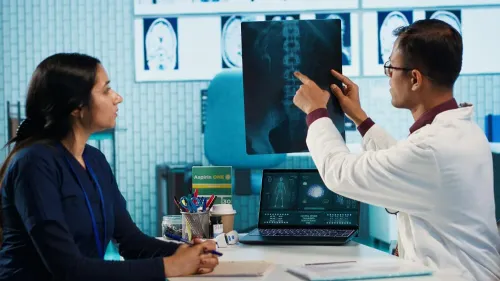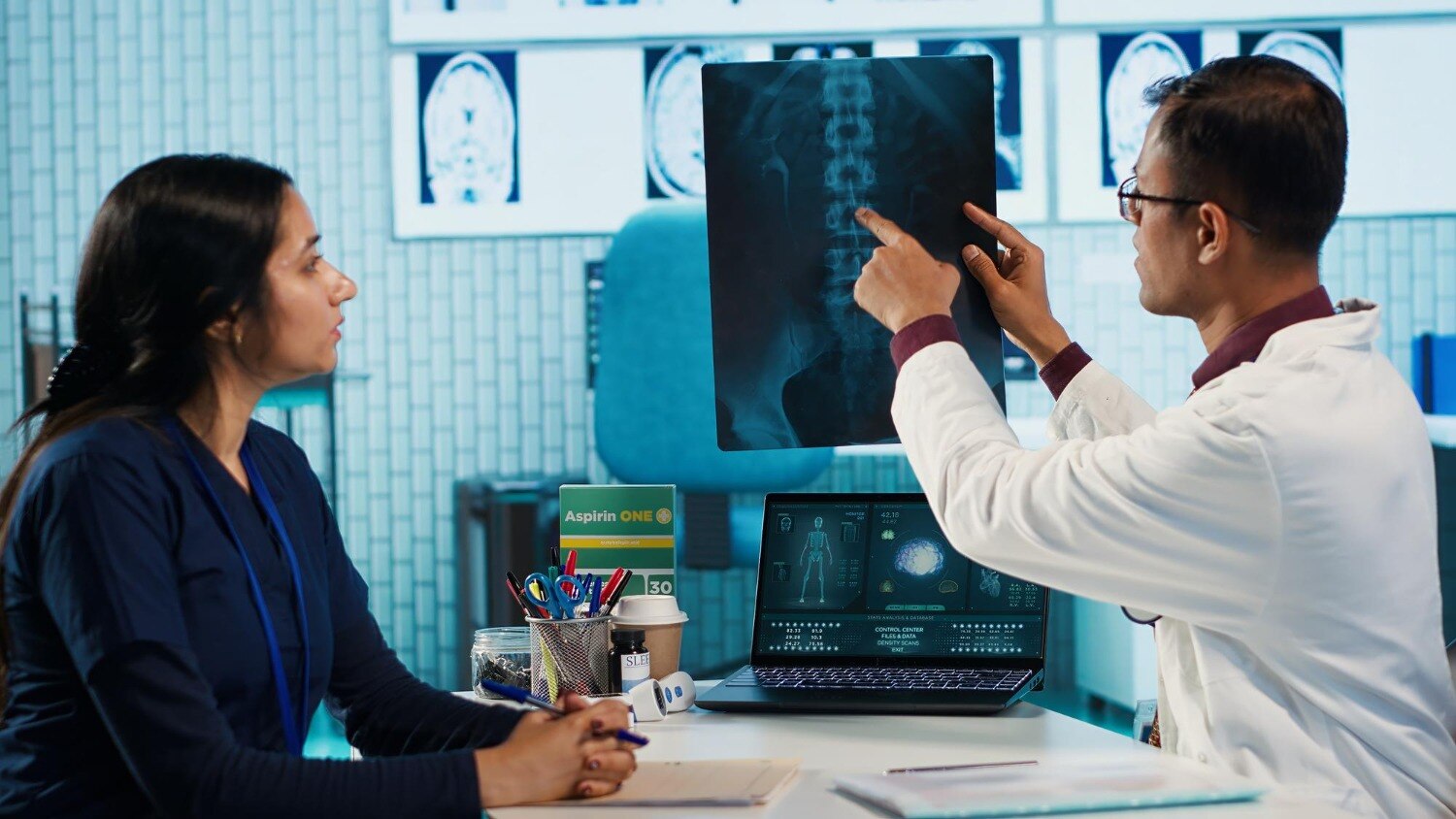
The better starting point depends on whether you want broad entry-level imaging work or a focused role around one advanced scanner. You will be able to compare the duties, safety demands, course quality and employer expectations before choosing a programme in Pune.
Key takeaways
- Choose X-ray for broader entry-level imaging work.
- Treat MRI as a specialisation unless clinical placement is confirmed.
- Compare equipment access, clinical hours and recognised eligibility before enrolling.
- Ask whether the course includes radiation safety and supervised patient positioning.
Choose X-Ray First for Broader Entry-Level Work
For most beginners asking x ray or mri course which is better in pune, X-ray is the stronger starting point when your goal is the widest range of entry-level imaging work. Radiography training can lead to general X-ray, portable examinations, trauma imaging and, with further employer training, CT-related departments.
X-ray course versus mri course in pune
| Option | Entry-level breadth | Best fit |
|---|---|---|
| X-ray/radiography | General radiography, portable X-ray, trauma imaging and a possible route toward CT or MRI | Beginners seeking varied hospital work |
| MRI | One specialised modality involving screening, coils, positioning and patient monitoring | Students with imaging foundations or confirmed supervised MRI placement |
MRI is not automatically the better medical imaging course. Its work demands strict checks for pacemakers and other implants, metal fragments, pregnancy-related concerns and claustrophobia, plus MRI-compatible equipment and emergency procedures. A short course with little clinical exposure may not prepare you for those responsibilities.
Check what “MRI course” actually means before enrolling. In Pune, that label can describe a degree, postgraduate programme, diploma or short certificate, each with different eligibility, clinical hours and employer acceptance. Ask for the awarding body, hospital internship details and written evidence that local employers recognise the qualification.
An X-ray technician acquires images and supports patient care; a radiologist is the medical doctor who interprets them. Neither course alone authorises independent diagnosis, prescribing examinations or unrestricted contrast administration.
How X-Ray and MRI Technologists Work Differently
An X-ray technologist prepares patients, confirms the requested examination, selects exposure factors, positions anatomy and captures diagnostic images. The work covers routine radiography, trauma imaging and portable examinations, with radiation protection applied to every exposure.
An MRI technologist prepares patients for a powerful magnetic field and radiofrequency energy rather than ionising radiation. The role includes screening, coil placement, sequence selection, patient monitoring and helping motion-prone or anxious patients remain still.
X-ray department | MRI department Patient preparation | Verify identity, examination and pregnancy status when relevant | Complete implant, metal, foreign-body and safety screening Image acquisition | Position the patient, choose exposure factors and evaluate image quality | Position the patient, select coils and sequences, and check for motion Contrast support | Prepare or assist with contrast protocols under authorised supervision | Follow MRI contrast protocols and monitor for reactions under authorised supervision Main hazards | Unnecessary ionising radiation, repeat exposures, contamination and falls during transfers | Projectile accidents, burns from conductive items, implant malfunction, acoustic injury and claustrophobia Emergency response | Stop the procedure, protect staff and patient, and document incidents | Remove the patient from the scanner area when safe, activate emergency procedures and document incidents
For an X-ray course versus MRI course in Pune, the daily risk profile matters as much as the machine:
- X-ray staff control distance, shielding, exposure time and repeat rates.
- MRI staff check every object entering the scan room, including oxygen cylinders, wheelchairs, tools and monitoring equipment.
- Neither role independently prescribes examinations, issues diagnostic reports or administers contrast without the required authority and protocol.
A course that teaches machine operation but omits positioning, consent, infection control, emergency response and documentation leaves you unprepared for either department.
Compare the Imaging Modalities and Practical Skills
A strong imaging course teaches image acquisition, patient care and safety—not just console operation. It covers anatomy, physics, patient identification, consent, positioning, image-quality checks, infection control and documentation. A radiographer or technologist acquires images; a radiologist is a doctor who interprets them. A technician course does not qualify you to report scans or diagnose disease.
| Modality | Main energy and purpose | Practical skills required |
|---|---|---|
| Plain radiography | Ionising X-rays create two-dimensional images | Anatomical projections, exposure selection, positioning, portable imaging and radiation protection |
| CT | Rotating X-rays produce cross-sectional images | Protocol selection, dose awareness, contrast support and emergency response |
| Fluoroscopy | Pulsed or continuous X-rays show movement in real time | Table positioning, contrast assistance, sterile practice and protection from prolonged exposure |
| Mammography | Low-dose X-rays image breast tissue using compression | Patient communication, precise positioning, compression and quality evaluation |
| MRI | A strong magnetic field and radiofrequency energy produce detailed soft-tissue images | Implant and foreign-body screening, coil placement, sequence selection, artefact control and MRI-compatible monitoring |
A complete syllabus also provides supervised practice in:
- Patient preparation, communication and consent
- Contrast-reaction response and escalation
- Infection control and safe transfer of patients
- MRI screening for implants, pregnancy-related concerns and claustrophobia
Compare medical imaging courses in Pune by qualification level, clinical placement and modality coverage, not advertised duration. A radiology technician course in Pune with general radiography, CT observation and documented clinical practice offers broader preparation than an MRI-only certificate.
MRI training is valuable when scanning practice is supervised; lectures alone cannot teach coil placement, motion management or image-quality checks.
Treat MRI as a Specialisation Unless the Pathway Is Clear
An MRI course is useful career preparation only when it leads to supervised competence and a qualification employers recognise, not merely an MRI-labelled certificate. Choose it as a targeted specialisation if you already have a relevant radiography or imaging foundation, or if the provider has secured substantial supervised MRI placement.
Before paying fees, verify:
- The awarding body, qualification level and entry eligibility, including whether prior radiography, anatomy or physics study is required.
- A named hospital or diagnostic centre placement, its duration, and your access to patient preparation, screening, coil placement, positioning, sequence selection and image-quality checks.
- Training in implant and foreign-body screening, pregnancy-related questions, claustrophobia, patient monitoring, MRI-compatible equipment and contrast-related workflows.
- Written evidence that local hospitals, imaging centres or employers accept the qualification for MRI technologist applications.
A course built around lectures and occasional observation will not prepare you to manage motion, artefacts, emergencies or unsafe equipment choices. Ask how many scans students observe and perform under supervision, who signs off competence, and whether placement hours appear in the official record.
The answer to “x ray or mri course which is better in pune” depends on your entry point and target job. Compare medical imaging courses in Pune by clinical scope, not advertised duration.
K. P. Paramedical Institute is worth asking for the exact placement and progression evidence behind any radiography programme before treating it as a route toward MRI.
Related products
 | Best X-RAY The X-Ray Technician Course at K P Paramedical Institute is a career-oriented paramedical program designed to prepare students for careers in... View product → |
 | Best DRIT The Diploma in Radiology & Imaging Technology (DRIT) at K P Paramedical Institute is a career-oriented paramedical program designed to prepare... View product → |
Use This Pune Course-Selection Checklist Before Enrolling
Obtain written, signed answers before paying any fee. The words “MRI course” can describe a degree, postgraduate specialisation, diploma or short certificate, so the title alone proves little.
| Evidence | X-ray programme | MRI programme |
|---|---|---|
| Awarding document | Exact degree, diploma or certificate and awarding authority | Same details, including specialisation level |
| Clinical training | Total supervised hours, hospital name and departments covered | MRI hours, scanner access and named clinical supervisor |
| Job eligibility | Exact graduate job title, such as radiographer or imaging technologist | Employers and roles that accept this qualification |
| Safety preparation | Radiation protection, dosimetry and contrast-reaction training | Implant screening, pregnancy questions, claustrophobia, emergency response and MRI-compatible monitoring |
| Assessment | Practical examination, logbook and internship completion document | Practical examination, case records and internship completion document |
For a radiology technician course in Pune, request the curriculum, timetable, clinical-placement agreement and equipment list. Confirm that training includes patient identification, consent, positioning, anatomical projections, image-quality checks, infection control and documentation, not just console operation.
Before comparing an X-ray Course versus an MRI Course in Pune, ask for:
- The recognition or affiliation letter and current admission eligibility
- The total fee, refund terms and every additional examination or internship charge
- Written confirmation of functioning equipment and supervised clinical access
- The exact job title graduates may apply for
Reject any provider that promises reporting or diagnosis. A technician acquires images and supports patient safety; a radiologist is the medical doctor who interprets scans.
Frequently asked questions
Is an X-ray or MRI course better in Pune for beginners?
X-ray is usually the stronger starting point when you want broader entry-level work, including general and portable radiography. MRI suits students who already have a clear specialisation pathway.
How do X-ray and MRI technologists work differently?
X-ray technologists manage radiation-controlled examinations, patient positioning and image exposure. MRI technologists screen for implants, position patients inside a strong magnetic field and manage scan protocols, safety and claustrophobia.
What practical skills should you compare in medical imaging courses in Pune?
Compare supervised clinical hours, access to working X-ray or MRI equipment, patient positioning practice, image-quality assessment, radiation safety training and experience with hospital workflows.
What should you check before enrolling in a radiology technician course in Pune?
Confirm the course’s eligibility requirements, syllabus, clinical placement, equipment access, assessment method, certificate recognition and progression route into higher-level imaging roles.