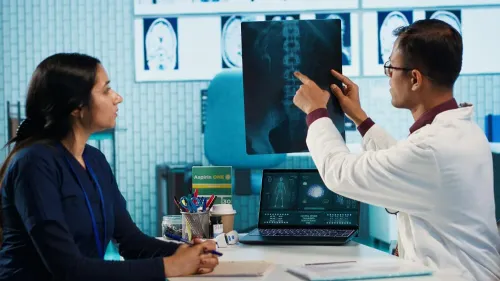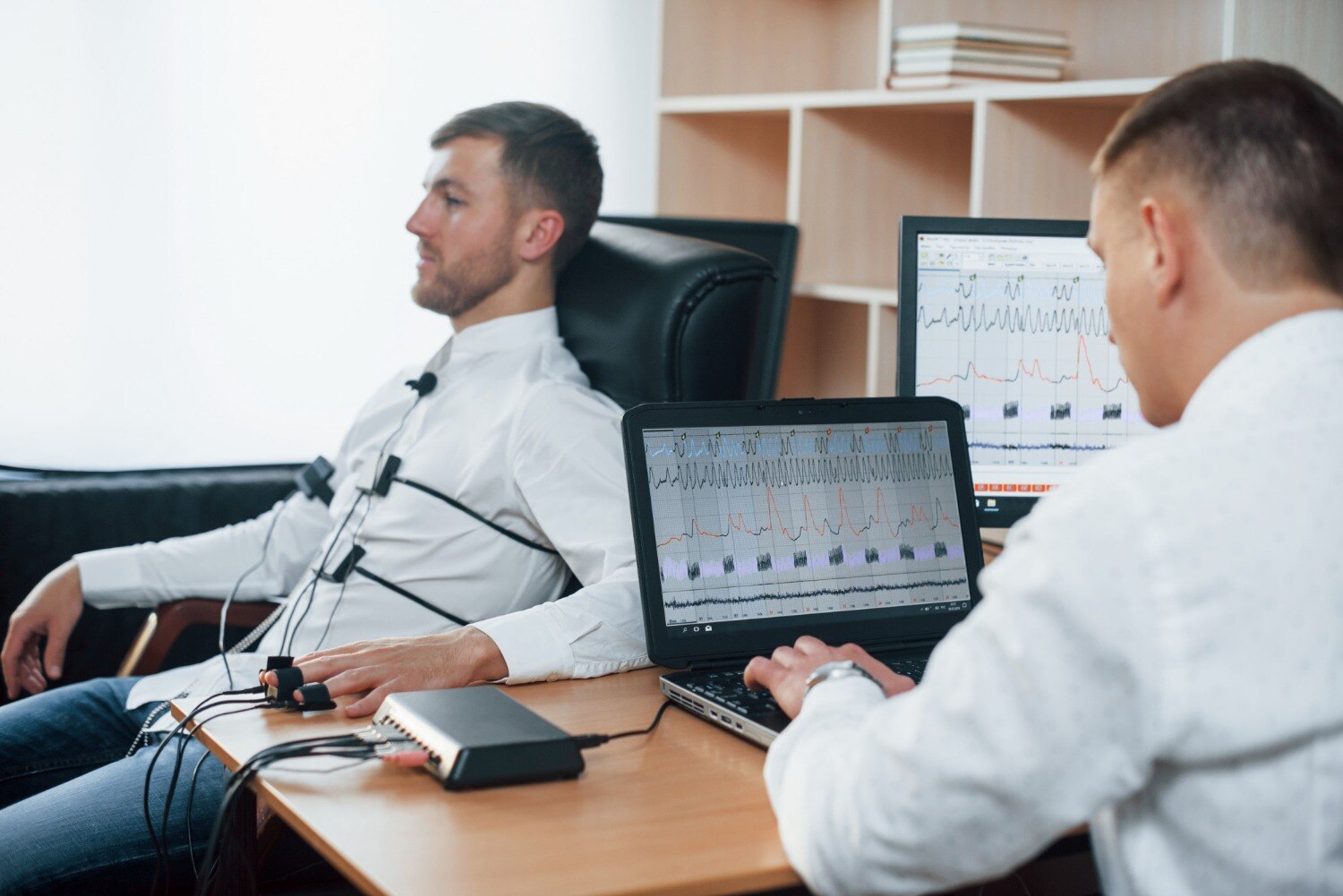
An ECG technician course should teach more than how to press a print button: you need to identify the patient, place 10 electrodes accurately, produce a readable 12-lead tracing and document the procedure safely. By comparing lessons, supervised practice, equipment access and admission conditions, you can judge whether a course prepares you for real diagnostic-centre work.
Key takeaways
- Record a resting 12-lead ECG and label each tracing correctly.
- Study cardiac anatomy, ECG waves, lead placement, artefacts, and basic rhythm recognition.
- Practise electrode placement, machine operation, patient preparation, and safe infection control.
- Compare admission rules, supervised practical hours, equipment access, and assessment methods.
What does an ECG technician do during a patient appointment?
A resting 12-lead ECG appointment is a recording procedure, not a diagnosis session. ECG technician training in Pune prepares the technician to obtain a reliable tracing and pass it to the qualified clinician responsible for interpretation.
1. Confirm the patient’s name, date of birth or hospital identification number, and the test request. Explain that the resting procedure records the heart’s electrical activity while the patient lies still, then obtain cooperation and provide privacy.
2. Position the patient supine when possible. Expose only the required chest area, preserve dignity with a sheet, and prepare the skin by cleaning oil, sweat or hair where electrodes must stick.
3. Attach four limb electrodes and six chest electrodes. These 10 electrodes create leads I, II, III, aVR, aVL, aVF and V1–V6.
4. Ask the patient to relax, remain still and breathe normally while you record. Check the tracing for lead connection, baseline stability, interference, missing complexes and correct patient details; repeat it if the result is unreadable.
5. Label and store the paper tracing or digital record with the patient’s identifiers, date and time. Report technical problems, chest pain, breathlessness, faintness or other concerning symptoms to the clinician promptly.
A technician records and quality-checks the ECG. A qualified clinician interprets it, diagnoses disease and decides treatment; training is not permission to diagnose or prescribe. Holter monitoring, stress testing, echocardiography and cardiac blood tests are separate procedures, not a standard resting ECG.
Which ECG course details in Pune belong in the theory syllabus?
The theory syllabus should explain how the heart produces a tracing before students handle the machine. Use ecg course details in pune as a search term, then check that the syllabus names these lessons:
- Cardiac anatomy and physiology, the cardiac cycle, and the electrical conduction system: sinoatrial node, atrioventricular node, bundle of His and Purkinje fibres.
- Lead purposes: I, II, III, aVR, aVL and aVF view the frontal plane; V1–V6 view the horizontal plane, showing septal, anterior and lateral activity.
- P, QRS and T waveforms; PR interval, QRS duration, QT interval and ST segment; and heart-rate calculation from the ECG grid.
| Theory area | What the syllabus should cover | Boundary to confirm |
|---|---|---|
| Rhythm study | Normal sinus rhythm, basic rhythm recognition and introductory abnormal-pattern identification | Escalate an unusual or alarming tracing and symptomatic patient; do not diagnose independently |
| Machine operation | 25 mm/s paper speed, 10 mm/mV gain, calibration marks, accurate patient-data entry, lead labels, and paper or digital transmission | Use another setting only when the clinician or protocol specifies it |
| Additional monitoring | Exercise ECG, Holter monitoring and ambulatory blood-pressure monitoring | These are separate topics; ECG in the course title does not guarantee them |
Students should learn to recognise a technically poor tracing and report it rather than interpret it as disease. Theory must support supervised practical work, while clinical interpretation, diagnosis and treatment decisions remain with a qualified clinician.
What equipment and procedures are covered in ECG course practical training?
ECG course practical training uses repeated supervised recordings, not a single demonstration. Students work with an ECG machine, 12-lead cable, four limb electrodes, six chest electrodes, disposable electrodes, an examination couch, ECG paper or a digital recording system, alcohol wipes, a razor or clippers, and approved cleaning supplies.
1. Confirm the patient’s name and details, explain the resting test, obtain cooperation and privacy, position the patient supine when possible, and expose only the required skin.
2. Prepare the skin with alcohol wipes and let it dry. Remove excess hair with a razor or clippers when needed, then attach electrodes firmly without placing them over broken skin.
3. Place the right arm and left arm leads on the limbs or suitable proximal sites. Place the right leg electrode as the reference electrode and the left leg electrode as the remaining limb lead.
4.
Locate the chest landmarks precisely: V1 at the fourth intercostal space on the right sternal border; V2 at the corresponding left sternal border; V4 at the fifth intercostal space on the mid-clavicular line; V3 between V2 and V4; V5 at the anterior axillary line level with V4; and V6 at the mid-axillary line level with V4.
5. Check lead connections and reversal, confirm calibration at 25 mm/s and 10 mm/mV unless instructed otherwise, enter accurate patient details, and produce a clean, labelled tracing.
Never place V1 or V2 too high, or V4–V6 on breast tissue instead of the chest wall. Clean reusable surfaces and dispose of single-use electrodes safely.
How do students learn patient care and troubleshoot a poor tracing?
A useful ECG technician training in Pune treats infection control and patient dignity as clinical skills, not extras. Students perform hand hygiene before and after contact, clean reusable electrodes, cables and couch surfaces with approved supplies, and discard single-use electrodes in the designated waste container.
They apply standard precautions to broken skin and infectious patients, following workplace protocol rather than placing electrodes over damaged tissue.
Before recording, students obtain consent, explain each step calmly, expose only the required chest area, use curtains or a private room, and reassure anxious patients. They follow the workplace protocol for pacemakers, wounds, tremors and latex sensitivity, including suitable electrode materials or escalation when needed. Calm communication reduces movement artefact.
- Replace loose electrodes and improve poor skin contact; remove dried gel before attaching fresh electrodes.
- Ask a trembling or moving patient to relax, support the limbs, and repeat the recording if muscle artefact remains.
- Reduce electrical interference by removing nearby sources or following the site’s interference-control protocol.
- Secure lead wires so cable movement does not create artefact.
- Verify chest-lead positions against anatomical landmarks.
- Check for reversed leads.
- Confirm 25 mm/s and 10 mm/mV unless the clinician specifies otherwise.
- Repeat an unreadable tracing; never submit it.
ECG course practical training should assess supervised recordings on real patients or realistic simulations, plus documentation, equipment care, stock handling and escalation of symptomatic patients or alarming traces. A single machine demonstration cannot establish competence.
How should you compare ECG technician admission in Pune and course quality?
Compare certificate, vocational and approximately one-year programmes by supervised clinical hours and required ECG recordings, not duration alone. The phrase ecg technician course what is included in pune should lead you to evidence: a longer course is not better if students receive one machine demonstration and no documented patient practice.
| Option | Compare | Ask for proof |
|---|---|---|
| Certificate | Shorter pathway with variable practice | Supervised hours, recording target and logbook |
| Vocational | Broader training with provider-specific assessment | Placement schedule, trainer supervision and re-examination policy |
| Approximately one-year | More time, but not automatically more competence | Clinical attendance record, equipment access and final assessment |
For ecg course details in Pune, request the written syllabus, practical logbook requirements and clinical-placement details before paying fees. Confirm that students record ECGs on real patients or realistic simulations, repeat unreadable tracings and receive feedback on electrode placement, patient communication and troubleshooting.
For ecg technician admission in Pune, ask for the exact batch rules:
- Is eligibility 10th standard or 12th standard?
- Are Physics, Biology, Chemistry or another science subject required?
- What age condition applies?
- Which documents are needed?
- Is selection direct or merit-based?
- Which awarding or affiliating body issues the certificate?
- Is placement at a named hospital or diagnostic centre documented?
- Do target employers accept the certificate?
Treat “government-approved” as incomplete without the approving body and scope of recognition. If comparing K. P. Paramedical Institute, apply the same checklist and verify these documents rather than choosing on a title or marketing phrase.
Related product
 | Best ECG The ECG Technician Course at K P Paramedical Institute is a career-focused paramedical program designed to train students in electrocardiography... View product → |
Frequently asked questions
What does an ECG technician do during a patient appointment?
An ECG technician confirms patient identity, explains the resting recording, prepares the skin, places limb and chest electrodes, records a 12-lead tracing, checks its quality, labels it, and forwards it to the qualified clinician for interpretation.
Which ECG course details in Pune belong in the theory syllabus?
The theory syllabus should cover cardiac anatomy and physiology, the electrical conduction system, ECG waves and intervals, standard 12-lead placement, recording principles, common artefacts, basic rhythm recognition, patient safety, documentation, and professional boundaries.
What equipment and procedures are covered in ECG course practical training?
Practical training should include a 12-lead ECG machine, disposable electrodes, lead wires, patient couch preparation, skin preparation, electrode placement, recording, printout or digital file handling, cleaning, and infection-control procedures.
How do students learn patient care and troubleshoot a poor tracing?
Students practise consent, privacy, positioning, clear instructions, and calm communication. They troubleshoot by checking electrode contact, skin preparation, lead connections, cable damage, patient movement, muscle tension, and electrical interference.
How should you compare ECG technician admission in Pune and course quality?
Compare entry requirements, course duration, supervised practical hours, access to working ECG machines, clinical exposure, assessment methods, trainer qualifications, attendance rules, and the documents issued after completion.