Students need more than a list of surgical subjects before choosing an OT technician program. By comparing classroom topics, practical tasks, hospital exposure, role limits, and admission checks, you can judge whether a course prepares you for real operating-theatre work or offers only classroom instruction.
Key takeaways
- Check that anatomy, microbiology, pharmacology, and surgical procedures are taught.
- Expect hands-on instrument handling, theatre setup, patient transfer, and specimen labelling.
- Ask how sterilisation, biomedical waste, and surgical safety are assessed.
- Confirm hospital postings, supervised duties, course duration, and certificate recognition.
Which subjects are included in the classroom curriculum?
An OT technician course what does it include in Pune? The classroom foundation should connect anatomy and physiology, medical terminology, microbiology, pathology, pharmacology basics, surgical procedures, anaesthesia basics, patient care, hospital ethics, biomedical-waste management, and emergency support to actual theatre duties.
| Subject area | What you should learn | Theatre responsibility it supports |
|---|---|---|
| Anatomy, pathology and specialties | Body systems, disease processes, general surgery, orthopaedics, obstetrics and gynaecology, ENT, ophthalmology, urology, trauma, and post-anaesthesia recovery | Preparing for the procedure and anticipating equipment needs |
| Safety and support | Anaesthesia basics, patient care, emergency support, infection prevention, ethics, and biomedical-waste segregation | Safe transfer, positioning, readiness checks, and escalation |
| Records and stock | Case lists, theatre documentation, stock records, instrument and sponge counts, specimen labels, incident reports, and handover notes | Accurate communication before and after each case |
Compare OT technician course details in Pune against this checklist:
- Does the syllabus explain why a disease or body system changes the technician’s preparation?
- Does it cover specimen labeling, count recording, stock maintenance, incident reporting, and handover of patient and equipment status?
- Does it include supervised exposure to the listed specialties and recovery-area work, rather than presenting unrelated operations as memorised names?
A syllabus that lists surgery without records, safety, and team communication is incomplete.
What does OT technician practical training involve?
A good operation theatre course in Pune turns demonstrations into repeated, supervised tasks. Students first practise in a simulation lab, then apply the same routines during supervised procedures in a functioning theatre.
1. Identify forceps, retractors, scissors, needle holders, clamps, suction tips, electrocautery accessories, sutures, dressings, and disposable consumables. Practise arranging instrument sets, checking pack integrity and expiry labels, preparing sutures, counting items, and preparing the trolley.
2. Perform surgical hand antisepsis, gowning, gloving, sterile-field setup, and aseptic assistance while a procedure is underway. Students learn to protect the field, avoid contamination, and report a break immediately rather than silently continuing.
3. Carry out basic readiness checks on operating tables, surgical lights, suction machines, patient monitors, oxygen systems, anaesthesia workstations, and diathermy equipment. They practise safe connection or placement within their assigned duties and report faults; they must not attempt unauthorised repairs or administer anaesthesia.
4. Prepare patients through identity checks, privacy protection, consent-form verification, safe transfer, positioning, and pressure-area protection. Training includes transporting the patient to recovery and handing over relevant status to the next team.
Supervised postings reveal what a lab cannot: shift work, emergency preparation, teamwork, documentation, and real-time asepsis. Practical competence means performing these steps reliably under supervision, not merely naming instruments in an examination.
How are sterilisation, infection control, and surgical safety taught?
Sterilisation is taught as a documented chain, not as “put instruments in the autoclave.” A complete operation theatre course in Pune connects hand antisepsis, PPE, sterile technique, decontamination, monitoring, storage, and handover.
- Perform surgical hand antisepsis, then put on the correct gloves, gown, mask, eye protection, and other PPE.
- Clean instruments before sterilisation; soil left on an instrument can shield microorganisms from steam.
- Inspect, assemble, package, and label each set with its contents, packing date, load number, and responsible person.
- Learn autoclave principles: saturated steam, pressure, temperature, exposure time, drying, and correct loading.
- Read chemical indicators on every pack and understand biological indicators used to challenge steriliser performance.
- Store sterile packs in a clean, dry area without crushing or opening them, and maintain traceability records.
- Hand over processed sets to or from the Central Sterile Services Department (CSSD), reporting wet, torn, expired, or failed packs.
Training also covers operating-room cleaning before and after cases, biomedical-waste segregation into colour-coded containers, and sharps disposal without recapping needles. Students practise spill response and report contamination, needlestick injuries, or other exposure incidents.
They participate in the WHO Surgical Safety Checklist: confirming identity, procedure, site, equipment, antibiotic timing, counts, specimen labels, and sign-out. Instrument, needle, and sponge counts are performed with designated team members and recorded.
Compare OT technician course details in Pune for this documentation and supervised practice, while remembering that safe preparation does not authorise independent decisions about medicines, anaesthesia, or surgery.
What hospital exposure and role boundaries should you expect?
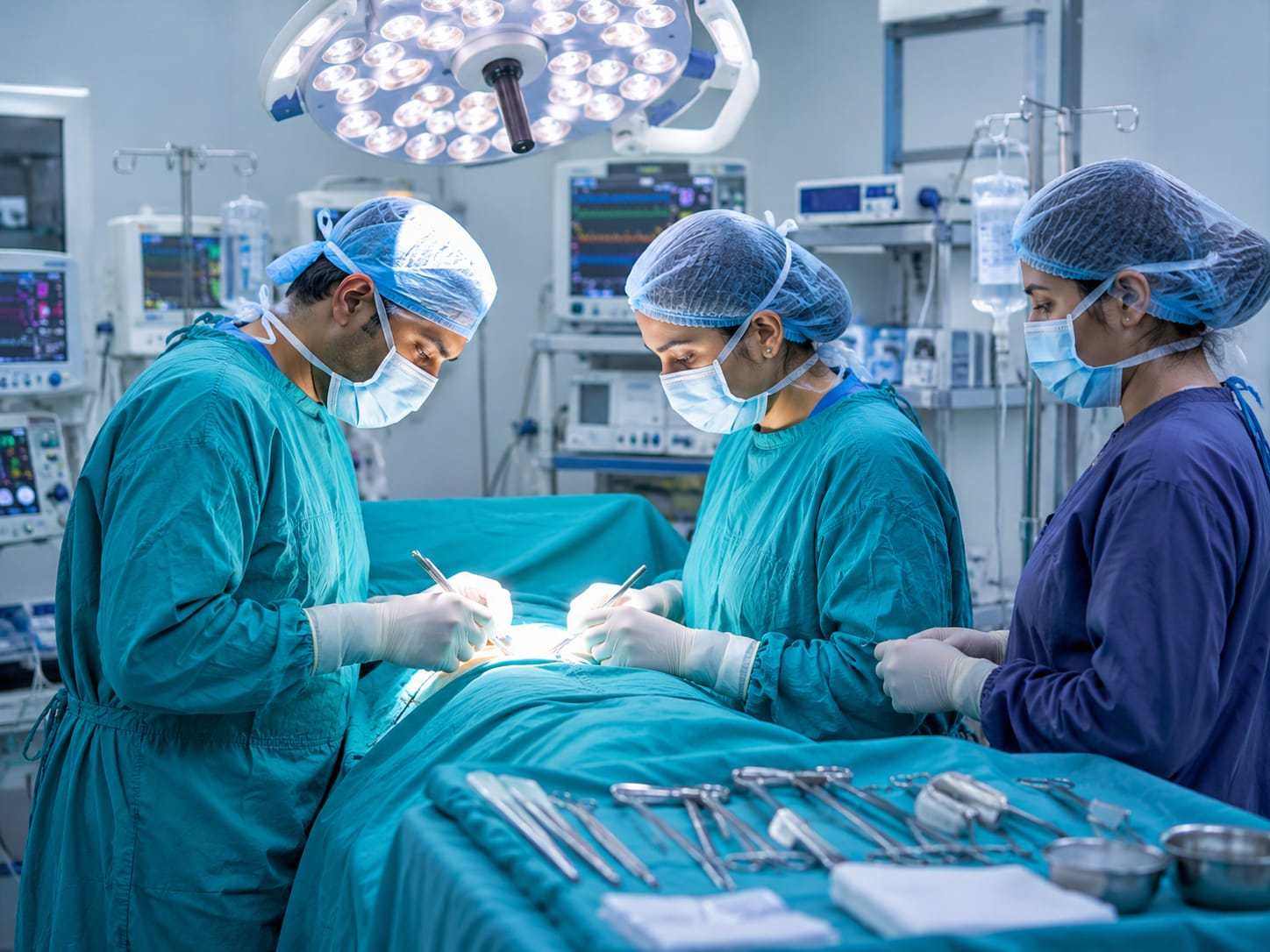
Classroom practicals are not enough; you need repeated supervised postings or an internship in a functioning hospital theatre. An operation theatre course in Pune should expose you to general surgery, orthopaedics, obstetrics and gynaecology, ENT, ophthalmology, urology, emergency or trauma surgery, and the post-anaesthesia recovery area.
Look for clinical training that includes:
- Reading case lists, preparing theatres, and working assigned shifts
- Preparing for emergency procedures and checking basic equipment readiness
- Performing instrument, needle, and sponge counts with designated team members
- Handling and labeling specimens, completing theatre records, and reporting incidents
- Checking stock, segregating biomedical waste, and following cleaning routines
- Supporting safe transfer, positioning, pressure-area protection, and recovery handovers
OT technician practical training should show you how to prepare instruments and theatre areas, assist the sterile team within your training, check suction, oxygen, airway equipment, monitors, and anaesthesia-workstation supplies, and report faults.
You can support patient positioning and basic anaesthesia-room preparation, but you cannot diagnose, prescribe, administer anaesthesia independently, perform surgery, or make decisions outside your assigned scope.
Role | Main responsibility | Boundary
OT technician | Theatre preparation, transfer, positioning, equipment checks, counts, and supervised sterile assistance | Does not prescribe, diagnose, anaesthetise, or operate
Staff nurse | Broader nursing care, medicines, monitoring, and patient documentation | Does not direct surgical treatment
Anaesthesia technician | Anaesthesia workstation, airway equipment, and related supplies | Does not independently administer anaesthesia
Surgical technologist | Sterile instruments and operative assistance | Works under the surgical team’s direction
Surgeon | Diagnosis, operation, and surgical treatment decisions | Directs the procedure and clinical plan
How should you compare OT technician admission options in Pune?
Compare the qualification, clinical training, and employment acceptance—not just the course name—before choosing ot technician admission in pune. “Ot technician course what does it include in pune” has no single answer because providers use different titles and standards.
| Option | Entry and duration check | Evidence to request |
|---|---|---|
| Certificate in Operation Theatre Technology | Often Class 10; verify duration and science requirement | Certificate format and accepting employers |
| Diploma in OT Technology or OT Technician | Often Class 12; check science subjects, marks, and duration | Examination authority and hospital eligibility |
| B.Sc. Operation Theatre Technology | Class 12 science and degree duration; verify university affiliation | University recognition and post eligibility |
Ask the institute to confirm these points in writing:
- Minimum marks, age rule, entrance or merit admission, required documents, and lateral-entry policy.
- Awarding or affiliating body and recognition accepted by the hospitals or government posts you want.
- Named clinical hospital, required clinical hours or internship months, supervisor-to-student ratio, and recovery-area exposure.
- Assessment method, including written exams, practical demonstrations, logbooks, instrument counts, and supervisor evaluations.
A completion certificate is not automatically a qualification accepted for your intended post. Confirm acceptance with the employer or relevant authority; no course guarantees government employment or professional registration.
K. P. Paramedical Institute is one option to compare by requesting its current syllabus, practical timetable, clinical-placement details, assessment structure, and written training scope before paying.
Treat a vague internship, unnamed hospital, absent CSSD practice, no count training, or promises of independent anaesthesia as warning signs.
Related product
 | Best OT Technician The Operation Theatre (OT) Technician Course at K P Paramedical Institute is a career-focused paramedical program designed to train students in the... View product → |
Frequently asked questions
Which subjects are included in an OT technician course in Pune?
Core subjects include anatomy and physiology, medical terminology, microbiology, pathology, pharmacology basics, surgical procedures, anaesthesia basics, patient care, hospital ethics, biomedical-waste management, and emergency support.
What does OT technician practical training involve?
Practical training covers operating-theatre preparation, surgical instrument identification, sterile setup, patient positioning and transfer, assistance during procedures, specimen handling, equipment checks, and documentation under supervision.
How are sterilisation and infection control taught?
Training should cover hand hygiene, personal protective equipment, sterile-field maintenance, instrument decontamination, autoclave processes, sterilisation indicators, sharps disposal, biomedical-waste segregation, and surgical safety checks.
What hospital exposure should an OT technician student expect?
Hospital exposure should include supervised postings in operating theatres and related clinical areas, with practice in preparation, equipment support, patient transport, records, and post-procedure cleaning.
What role boundaries apply to an OT technician?
An OT technician supports theatre preparation, instruments, equipment, patient movement, infection control, and documentation. They do not independently diagnose, prescribe, administer anaesthesia, or perform surgery.