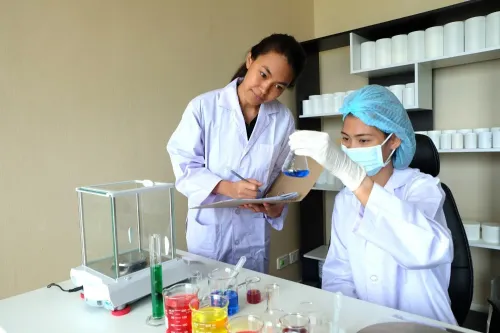
You learn far more than the names of surgical instruments: the training connects anatomy, sterile technique, equipment checks, patient safety and supervised theatre work. By the end, you should be able to compare an OT technician syllabus in Pune, identify meaningful practical training and recognise the limits of the technician’s role.
Key takeaways
- Study anatomy, physiology, microbiology, pharmacology and surgical procedures.
- Practise instrument preparation, patient positioning, specimen handling and theatre documentation.
- Learn sterilisation, infection control and safe handling of OT equipment.
- Ask for supervised theatre hours, skills checklists and practical assessments before enrolling.
What subjects are included in an OT technician syllabus in Pune?
An OT technician syllabus in Pune combines classroom science with supervised theatre practice. Anatomy covers major body systems; physiology explains vital functions; microbiology supports infection control; pharmacology covers common medicines; basic pathology links disease to surgery; medical terminology supports clear communication; and surgical procedures plus hospital documentation teach records, consent, specimens and operative notes.
These subjects connect directly to work: students prepare the operating room, identify and handle surgical specimens, assist with suturing, and support postoperative recovery and handover. Training also introduces unrestricted, semi-restricted and restricted zones, changing-room procedures, surgical attire, and controlled movement of patients, staff and sterile supplies to limit unnecessary traffic.
| Programme | Typical depth | What to verify |
|---|---|---|
| Certificate | Basic theory and supervised skills | Theatre exposure and assessed tasks |
| Diploma | Broader science and practical training | Clinical hours and logbook |
| Vocational programme | Institution-specific | Employer acceptance and permitted duties |
Course depth varies. An OT technician assists surgeons, nurses and anaesthetists under supervision; the role does not include independently diagnosing, prescribing, operating or administering anaesthesia. Practical learning should show how anatomy guides positioning, physiology informs recovery observation, microbiology governs asepsis, pharmacology supports safe handling, and documentation records counts, specimens and events.
A strong syllabus connects every classroom subject to a defined theatre task rather than treating examinations as proof of readiness.
What does an OT technician do before, during and after surgery?
1. Before surgery, you learn to prepare the operating table, lights, suction, electrosurgical unit, cautery plate, oxygen system, anaesthesia machine and patient monitor. You confirm the patient’s identity, consent, procedure and surgical site; check allergies, blood availability and ordered implants.
WHO Surgical Safety Checklist sign-in and time-out verify these details, airway or aspiration risk, anticipated blood loss, antibiotic prophylaxis and equipment concerns.
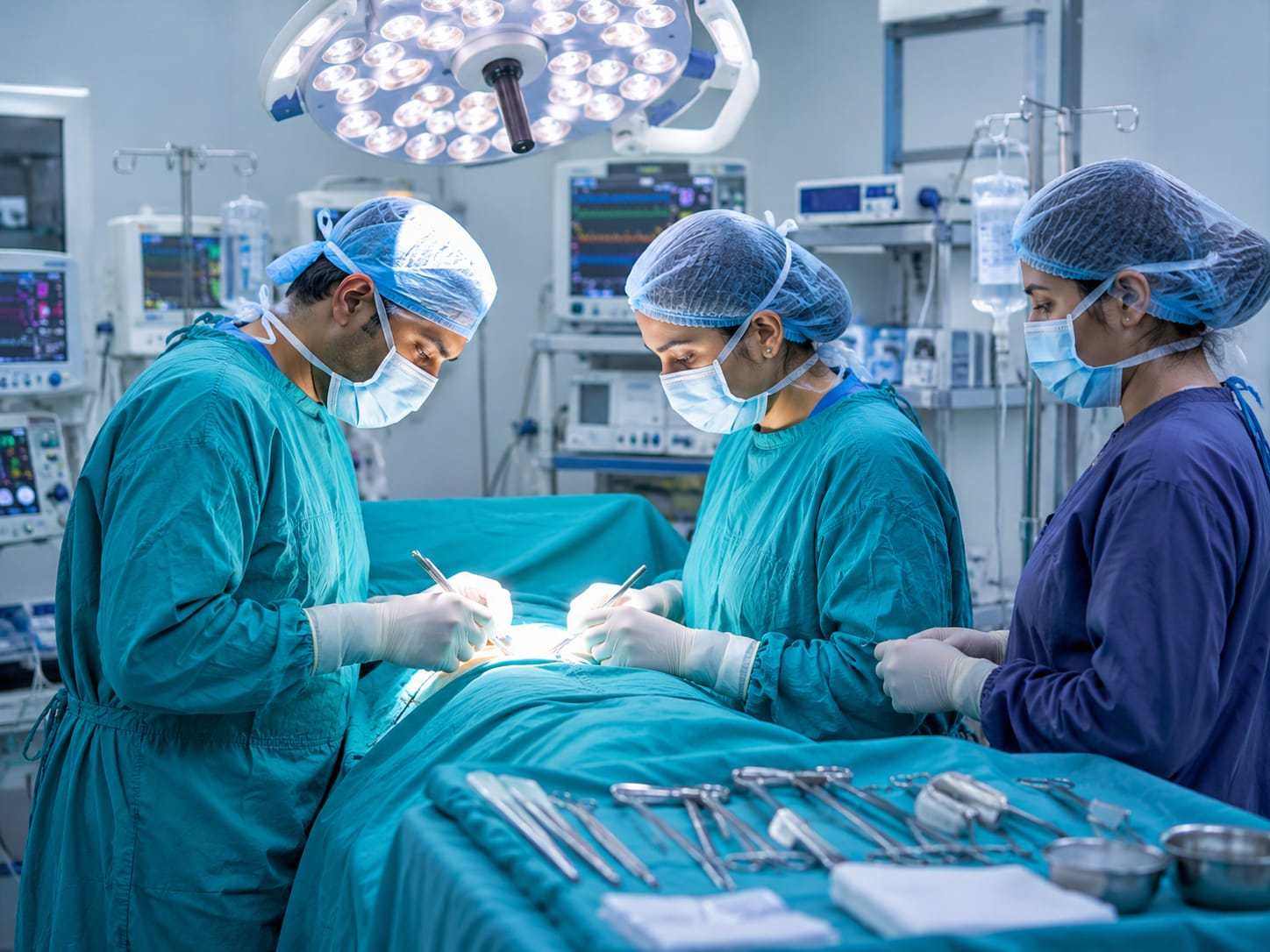
2. During surgery, the scrub technician passes sterile instruments and supplies while protecting the sterile field. The circulating technician remains non-sterile, documents events, obtains equipment, supports anaesthesia staff and responds to requests outside the field. Training includes transferring the patient safely, positioning the body, applying straps, protecting pressure points and preventing nerve or skin injury.
You learn to recognise abnormal monitor readings, airway obstruction, bleeding, allergic reactions or cardiac deterioration and escalate immediately to the anaesthetist or surgical team; you do not independently diagnose or treat.
3. After surgery, you complete the WHO sign-out, confirming sponge, needle and instrument counts, specimen labels and recovery concerns. You hand over the patient to the recovery-room team, then decontaminate surfaces and equipment, send instruments for cleaning and sterilisation, restock supplies and report faults in monitors, suction or other devices.
This three-stage workflow is central to what do you learn in OT technician course in Pune: safe assistance under supervision, not independent surgical decision-making.
How do you learn sterilisation, infection control and instruments?
An OT technician practical course in Pune should teach a traceable sterilisation chain, not just autoclave operation. Blood and tissue must be removed before sterilisation because residue can shield microorganisms from steam.
1. Treat instruments at the point of use, then transport them safely for cleaning. Students identify artery and mosquito forceps, retractors, needle holders, scissors, suction tips and surgical blades; they clean, inspect for damage, assemble trays, count contents, package, label and load the steriliser.
2. Select a steam cycle for the instrument, packaging and steriliser. Approximately 121°C uses longer exposure, while 132–135°C uses shorter exposure, but the manufacturer’s validated instructions and hospital protocol override any universal setting. Record the cycle, load, operator, chemical indicators and biological-monitoring results.
3. Store sterile packs in a clean, dry area and maintain traceability through pack labels, dates, load numbers and issue records. A torn, wet or expired pack returns for reprocessing.
4. Practise surgical hand scrub, gowning, gloving, sterile-pack opening, draping and sterile-field maintenance. A non-sterile glove touching a sterile item breaks asepsis; stop, report it and replace the contaminated item or glove.
5. Rehearse tray preparation, passing technique, and counts of instruments, swabs and needles before closure and transfer.
Learn biomedical-waste segregation at generation: yellow for anatomical or soiled waste, red for contaminated recyclable plastics, white translucent puncture-resistant containers for sharps, and blue for glassware and metal implants, with no needle recapping and compliance with current Indian rules and hospital policy.
Which procedures and equipment are covered in practical OT training?
A technician’s setup changes with the operation, not just the instrument count. Practical training compares specialty trays, positioning, draping, specimens and assistance tasks as follows:
| Specialty | Practical focus | Positioning and equipment concerns |
|---|---|---|
| General surgery | Laparotomy tray, retractors, suction, suturing assistance and tissue specimens | Supine; protect pressure points; check cautery return plate |
| Orthopaedic | Bone instruments, drills, saws, implants and tourniquet | Supine, lateral or prone; pad nerves; monitor tourniquet time and pressure |
| Gynaecological | Vaginal, abdominal and retractors; swab counts and tissue specimens | Lithotomy; support legs evenly; prevent peroneal-nerve injury |
| Obstetric | Caesarean tray, neonatal supplies, placenta and cord specimens | Supine with left tilt; prepare rapid suction and haemorrhage supplies |
| ENT | Fine instruments, suction and head-and-neck drapes | Supine or sitting; protect eyes and airway; manage laser hazards |
| Ophthalmic | Microsurgical tray, eye drapes and tiny sutures | Supine; avoid pressure on the eye; control microscope and laser risks |
| Urological | Cystoscopy, resection and irrigation equipment; urine or tissue specimens | Lithotomy; secure tubing; check electrical and fluid systems |
| Laparoscopic | Trocars, camera, insufflator, light cable and retrieval bags | Supine or tilted; check CO2 connections, imaging and cables |
Anaesthesia support includes preparing airway and suction equipment, checking oxygen and gas connections, and assisting induction or emergence only under direction. Escalate airway obstruction, bleeding, allergic reaction or cardiac deterioration immediately.
Classroom demonstrations are not clinical competence. A credible OT technician practical course in Pune rehearses simulated procedures, sterile dressing, tray setup, transfer, positioning, equipment checks, recovery handover and emergency drills before supervised postings. An assessed logbook and observed tasks should prove competence, not a written examination alone.
Choose operation theatre training in Pune that documents these assessments.
How can you judge whether a Pune OT technician course is genuinely practical?
A genuinely practical course can show where, how often and under whose supervision you practise. To judge what you learn in an OT technician course in Pune, ask for evidence rather than relying on the course title.
Check these points with every provider:
- Supervised OT postings, recorded clinical hours, a signed logbook and observed practical assessments.
- Access to operating tables, surgical lights, suction machines, electrosurgical units, anaesthesia machines and patient monitors, either in a hospital or a properly equipped training lab.
- Assessment of hand preparation, gowning and gloving, sterile-field breaks, instrument identification, sponge and needle counts, specimen labelling, safe patient transfer, waste segregation and emergency response.
- Practice with actual or simulated theatre setup, equipment checks, sterile-pack handling and recovery-room handover.
| Evidence to request | Weak substitute | Why it matters |
|---|---|---|
| Posting letter and attendance record | “Hospital exposure” in a brochure | Confirms supervised clinical hours |
| Completed logbook with supervisor signatures | Blank or self-written logbook | Shows repeated practice, not a single demonstration |
| Observed skills checklist | Written examination alone | Tests safe performance under scrutiny |
| Certificate acceptance confirmed with an employer or state authority | Course name used as proof | Names alone do not prove hospital readiness |
The OT technician syllabus in Pune can lead to different duties across hospitals, clinics and sterile-services departments. Qualifications, supervision and permitted tasks vary, so compare K. P. Paramedical Institute against the same evidence: postings, assessments, equipment and certificate acceptance—not promotional wording.
Related product
 | Best OT Technician The Operation Theatre (OT) Technician Course at K P Paramedical Institute is a career-focused paramedical program designed to train students in the... View product → |
Frequently asked questions
What subjects are included in an OT technician syllabus in Pune?
Core subjects include anatomy, physiology, microbiology, pharmacology, basic pathology, medical terminology, surgical procedures and hospital documentation.
What does an OT technician do before, during and after surgery?
Before surgery, the technician prepares the theatre, instruments, supplies and patient-support equipment. During surgery, they assist the sterile team, pass instruments and maintain counts. After surgery, they help with specimen handling, waste segregation, cleaning, documentation and instrument decontamination.
How do students learn sterilisation, infection control and instruments?
Practical training covers hand hygiene, sterile technique, instrument identification, decontamination, packaging, sterilisation workflows and storage of sterile packs under supervision.
How can you judge whether a Pune OT technician course is genuinely practical?
Ask for the supervised theatre schedule, practical skills checklist, instrument and equipment list, assessment method and details of clinical placement or hospital training.