
The choice depends on whether you want a focused renal-care role or the broader responsibilities and mobility of nursing. You will be able to compare qualifications, clinical duties, work conditions, employer expectations and training evidence before choosing a route in Pune.
Key takeaways
- Compare the qualification, duration and awarding body before enrolling.
- Choose dialysis training for focused renal-care work and nursing for broader responsibilities.
- Ask where technician duties end and nurse responsibilities begin.
- Test the course through eligibility, clinical exposure and likely work routines.
What Are You Actually Comparing: Dialysis Training, ANM, GNM or B.Sc. Nursing?
A dialysis technician course or nursing in Pune is not a comparison between equivalent qualifications. A dialysis programme may be a certificate, diploma or other vocational qualification, with duration, eligibility and awarding body varying by provider. Nursing commonly means Auxiliary Nurse Midwife (ANM), General Nursing and Midwifery (GNM) or B.Sc. Nursing.
| Route | Typical length | Qualification and training |
|---|---|---|
| ANM | About 2 years | Nursing and midwifery qualification with supervised clinical training |
| GNM | About 3 years | General nursing and midwifery qualification with broader clinical preparation |
| B.Sc. Nursing | 4 years | Undergraduate nursing degree with extensive clinical education |
| Dialysis technician | Variable | Certificate, diploma or vocational award named by the awarding authority; dialysis-unit training should be verified |
Admission rules depend on the institution and programme. Check whether it requires Class 10 or Class 12, science subjects such as Physics, Chemistry and Biology, a minimum age, entrance testing or merit selection, medical fitness, and documents including marksheets, identity proof and transfer certificates. Verify the current prospectus before applying.
Nursing leads to a nursing qualification and requires registration through the appropriate nursing council; check Indian Nursing Council and Maharashtra state-council recognition for the exact programme. Dialysis training leads only to the certificate or diploma named by its awarding authority, so confirm its affiliation, examination authority, clinical hours and employer acceptance.
Duration alone cannot prove equivalence: a shorter course may offer narrower training, while a longer course may carry registration and wider clinical eligibility.
Where Does a Dialysis Technician’s Role End and a Nurse’s Role Begin?
A dialysis technician’s role usually ends with technical operation, observation, documentation and escalation; a nurse carries broader clinical responsibility. The dialysis course versus nursing in Pune decision therefore depends on the work you want authorised to perform.
| Role | Dialysis technician | Nurse |
|---|---|---|
| Machine and treatment | Prepare and prime the haemodialysis machine; check dialysate conductivity and temperature; inspect the extracorporeal circuit; monitor ultrafiltration and alarms. | Assess the patient before, during and after treatment, then coordinate care with the clinical team. |
| Records and safety | Record vital signs and treatment data; clean and disinfect equipment; follow infection-control and biomedical-waste procedures. | Complete nursing documentation, care plans and shift handovers across dialysis units, wards, intensive care units, emergency departments and outpatient settings. |
| Patient care | Escalate clinical changes rather than making independent decisions. | Assess patients, administer medicines, provide wound care, manage changing priorities and respond to emergencies within the clinical team. |
A technician must not assume that medication administration, nursing assessments, wound care, vascular-access management or emergency treatment are authorised. Employer policy, qualification and direct supervision decide those boundaries.
Escalate immediately when you observe:
- Hypotension or sudden deterioration
- A blood leak or clotting in the circuit
- An air alarm or suspected air entry
- Pain, bleeding, swelling or another access problem
A registered nurse must lead nursing assessment, medication administration and immediate bedside care. A doctor must prescribe, diagnose, make medical decisions or intervene in serious complications. Never treat machine training as permission to perform clinical duties.
What Will Your Working Life Look Like in Pune?
A dialysis technician’s day is focused, technical and repetitive; a nurse’s day is broader, faster-changing and more patient-care intensive.
| Role | Daily work | Common settings |
|---|---|---|
| Dialysis technician | Prepare the patient and machine, check dialysate temperature and conductivity, inspect the extracorporeal circuit, check the access site under supervision, monitor vital signs and ultrafiltration, manage alarms, terminate treatment, disinfect equipment and complete records | Dialysis centres, nephrology units and hospital renal-care departments |
| Nurse | Give medication rounds, complete head-to-toe assessments, provide wound care, respond to changing priorities, document care and hand over patients between shifts | Multispecialty, government and private hospitals; intensive care, emergency, operating theatres, maternity, community and long-term care |
Dialysis technicians repeatedly meet people with chronic kidney disease who return several times a week. That continuity builds familiarity, but chronic complications, fatigue and treatment anxiety demand emotional steadiness.
Nurses encounter a wider mix of acute patients and usually carry broader bedside responsibility. A nursing or dialysis career in Pune can involve standing, blood and body-fluid exposure, strict infection-control routines, early starts, rotating shifts, night duty and emergency responses.
Choose dialysis if you prefer focused machine-based work, structured treatment sessions and long-term patient relationships. Choose nursing if you want broader first-job options and the possibility of moving between departments, postgraduate study, teaching or administration. Salary and course length do not show the daily workload.
How Can You Test Whether Dialysis Training Is Worth Enrolling In?
A course is worth enrolling in only when its documents prove repeated, supervised work in a functioning dialysis unit. Use this checklist for dialysis technician training in Pune, including when reviewing K. P. Paramedical Institute:
- Ask for the hospital-attachment agreement, the number of documented clinical hours, supervised haemodialysis sessions and learners assigned to each machine.
- Confirm that students practise patient preparation, machine setup, monitoring, termination and cleaning, rather than only observing. Ask whether practice occurs in a hospital unit or simulation room.
- Require named teaching on renal anatomy and physiology, vascular access, anticoagulation, water-treatment systems, dialysate checks, infection prevention and biomedical-waste handling.
- Look for practical drills covering blood leaks, hypotension, disequilibrium symptoms, air entry and emergency escalation.
- Request the awarding body, examination authority, affiliation, exact certificate title, assessment method and written placement details.
- Ask for written evidence of placement completion and whether employers in Pune accept the credential for dialysis technician recruitment.
| Document | What to verify | Warning sign |
|---|---|---|
| Hospital attachment | Signed agreement and placement dates | Verbal promise only |
| Clinical exposure | Hours, sessions and machine ratio | “Practical training” without figures |
| Qualification | Awarding body, exam and certificate title | Generic recognition claim |
| Assessment | Practical examination plus records | Attendance treated as competency |
A classroom syllabus does not prove employer acceptance. Compare these documents, not promotional language, and confirm current Maharashtra and employer requirements directly before paying any fee described as non-refundable; eligibility and acceptance rules can change.
Related product
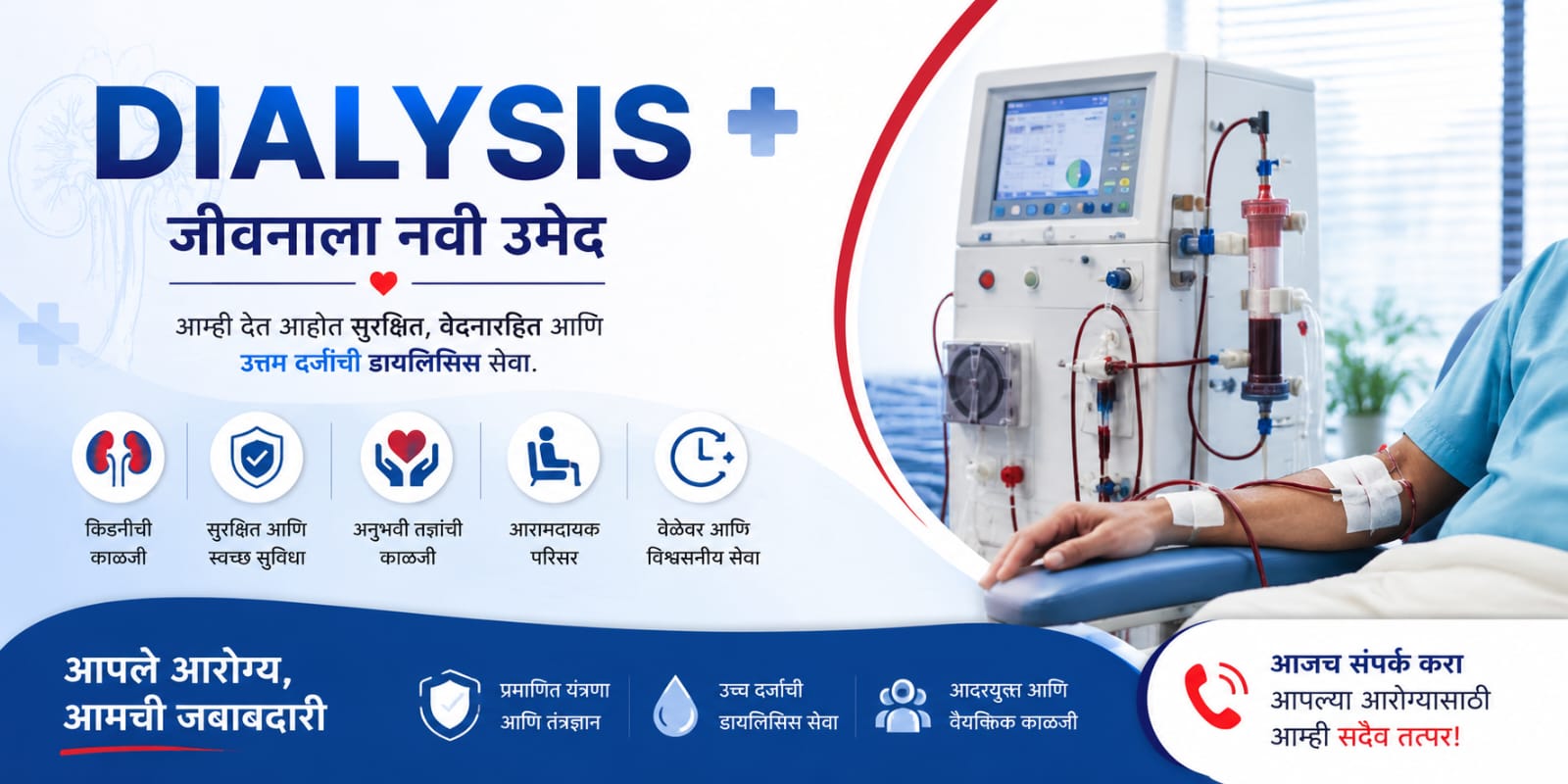 | Best Dialysis The Dialysis Technician Course at K P Paramedical Institute is a career-oriented paramedical program designed to train students in the operation and... View product → |
Which Route Fits Your Goal: Specialised Dialysis Work or Broader Nursing?
Choose dialysis when you specifically want renal care and accept a narrower first job market; choose ANM, GNM or B.Sc. Nursing when you want broader patient responsibility and more employment flexibility. For anyone comparing a dialysis technician course or nursing in Pune, the decision is about future work, not just course length.
| Route | Best fit | Main trade-off |
|---|---|---|
| Dialysis | You are comfortable with machine safety, repeated treatment sessions and focused renal-care work. | A shorter course may still require employer-specific orientation and offers fewer alternatives if you later leave renal care. |
| ANM, GNM or B.Sc. Nursing | You want patient assessment, medicines, broader bedside responsibility, department changes, or progression into nursing study. | Nursing demands longer study and a larger clinical commitment. |
For a dialysis course versus nursing in Pune, verify the exact qualification, registration or employer eligibility, supervised clinical hours, shift expectations, placement travel and your five-year career plan. Ask whether the programme provides genuine hands-on exposure rather than observation, and whether employers accept its certificate or diploma.
This nursing or dialysis career in Pune choice also depends on your tolerance for early starts, standing, blood exposure and rotating shifts. Select dialysis only after confirming machine-safety training and clinical supervision. Select nursing if you value movement through wards, intensive care, emergency, community or outpatient work.
Neither route is automatically better: choose the one whose legal scope, training evidence and future options match the work you intend to perform.
Frequently asked questions
What are you comparing in a dialysis course versus nursing in Pune?
You are comparing dialysis certificates or diplomas with ANM, GNM or B.Sc. Nursing. Their eligibility, duration, scope and awarding bodies differ.
Where does a dialysis technician’s role end and a nurse’s role begin?
A dialysis technician focuses on machine preparation, treatment setup, monitoring equipment and infection-control procedures. Nurses provide broader patient care, assessment, medication support and clinical coordination within their authorised scope.
How can you test whether dialysis technician training is worth enrolling in?
Check the course eligibility, awarding body, clinical training, dialysis-unit exposure and the daily duties expected after completion.
Should you choose nursing or dialysis training in Pune?
Choose specialised dialysis training if you want focused work in renal-care units. Choose ANM, GNM or B.Sc. Nursing if you want broader patient-care responsibilities and wider clinical options.