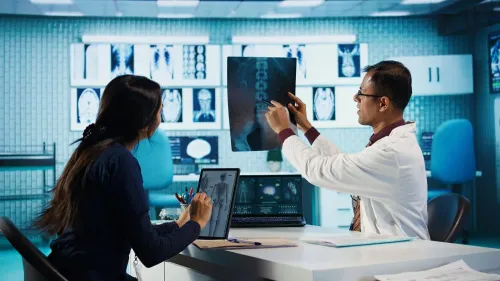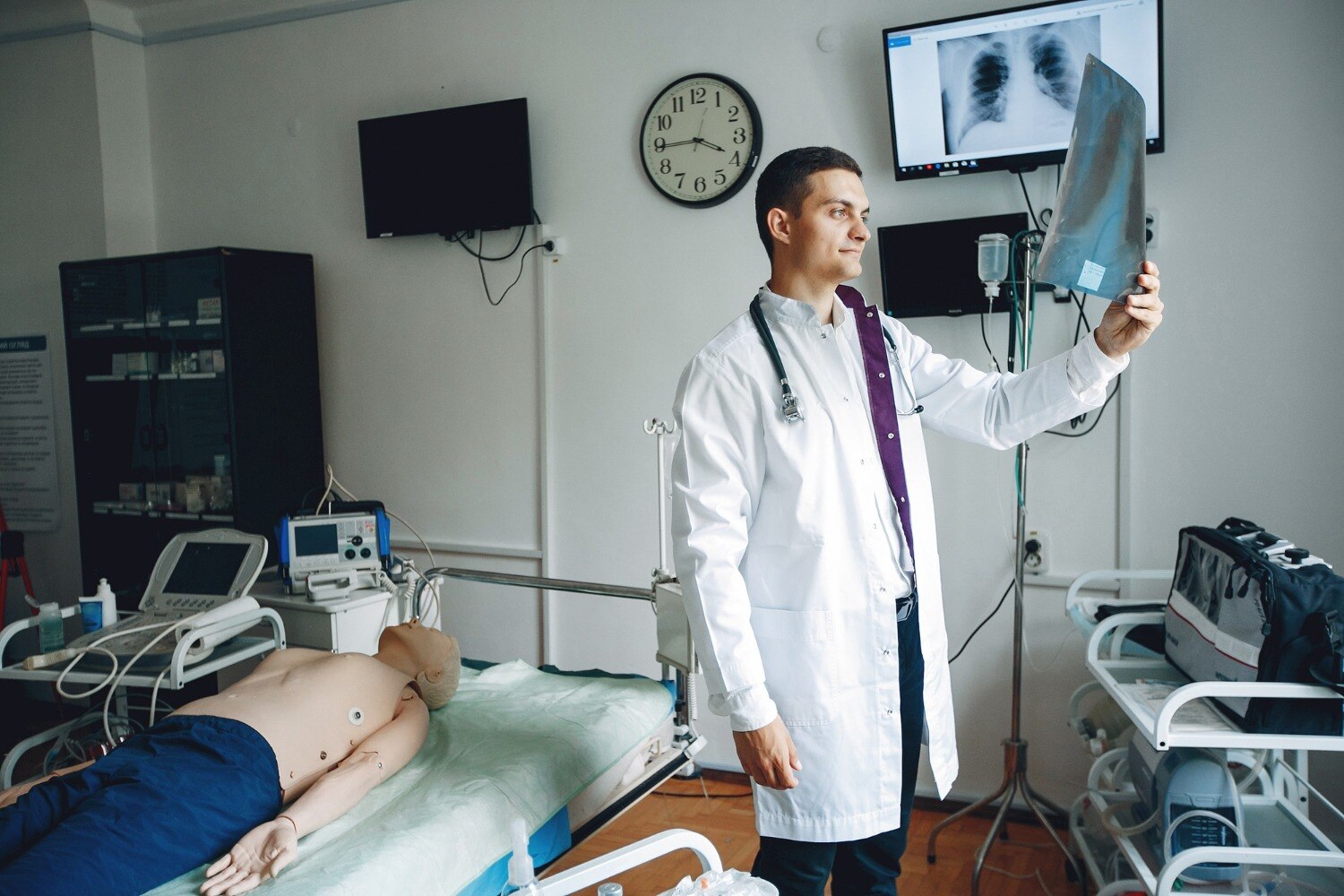
Hospitals use ECG technicians wherever clinicians need a technically reliable electrocardiogram quickly, from chest-pain assessment in the emergency department to routine pre-operative screening. By the end, you will know which Pune departments and workplaces hire them, what they do during a recording, where their responsibilities stop, and what to check before choosing training.
Key takeaways
- ECG technicians support emergency, cardiology, ICU, outpatient and preoperative departments.
- Accurate 12-lead ECGs require correct lead placement, patient preparation and signal checks.
- ECG technicians record tests; cardiologists interpret results and nurses manage broader patient care.
- Compare clinical practice, supervised training and course recognition before choosing an ECG course in Pune.
Which Pune hospital departments use ECG technicians?
ECG technicians work wherever a patient needs a resting or repeat electrocardiogram, not only in cardiology.
A search for where ecg for technicians work in pune should include emergency departments handling chest pain, breathlessness, palpitations, fainting or suspected arrhythmia; cardiology units; cardiac hospitals; intensive care units; medical and surgical wards; outpatient departments; pre-operative assessment areas; cardiac catheterisation units; health-check-up centres; and attached diagnostic centres.
A large hospital may move one technician between departments during a shift. Beyond hospitals, electrocardiography technician roles exist in standalone diagnostic laboratories, multispecialty clinics, ambulance or mobile-care services, occupational-health units and medical screening camps.
| Workplace or vacancy | Typical pattern | What to expect |
|---|---|---|
| Emergency, inpatient or ambulance service | Unpredictable demand | Standing, distressed patients, weekend coverage and rotational shifts |
| Outpatient department or health-check centre | Planned appointments | More predictable daytime work and repeated resting ECGs |
| Small diagnostic centre | Combined duties | ECGs plus registration, sample collection, Holter setup or report dispatch |
| Dedicated ECG post | ECG-focused work | Patient preparation, tracing quality checks, labelling and transmission |
| Multi-skilled technician vacancy | Several support functions | ECG work combined with reception, specimen or monitoring tasks |
Check the job description before applying. A dedicated ECG post differs sharply from a broader vacancy, where “ECG technician” may describe only one duty among several. That distinction matters if you want regular outpatient hours rather than hospital shifts or mobile-care work.
What ECG technician applications require hospital support?
ECG technician applications include a resting 12-lead ECG, rapid tracing for chest-pain assessment, pre-operative checks, monitoring admitted patients and preparing tracings for physician interpretation. Technicians also obtain serial ECGs: a baseline and a repeat after symptoms or treatment can reveal change, while the clinician decides what that change means.
- Confirm the patient’s name and identification details against the request and wristband.
- Explain that the test is painless, provide privacy and expose only the area needed for electrode placement.
- Position the patient comfortably, usually lying flat, and support the limbs if muscle tremor is present.
- Perform hand hygiene and prepare the skin by cleaning and drying the contact areas.
- Place four limb electrodes and six chest electrodes correctly.
- Ask the patient to remain still and avoid talking during recording.
- Check signal quality for baseline wander, muscle artefact, loose electrodes and cable problems.
- Record the tracing once the signal is technically usable.
- Label it with the patient’s details, date, time and relevant clinical information, such as chest pain or post-treatment status.
- Transmit the tracing or send it promptly for review.
- Clean the bed, cables and equipment under the facility’s infection-control procedure.
- Report deterioration or an urgent concern through the facility’s escalation process.
Electrocardiography technician roles focus on acquiring and quality-checking the tracing. A doctor or other authorised clinician interprets it and makes the clinical decision.
How do technicians obtain an accurate 12-lead ECG?
An accurate 12-lead ECG starts with correct placement: it uses 10 electrodes—four limb electrodes and six chest electrodes—not 12 electrodes.
Place the chest electrodes precisely: V1 at the fourth intercostal space at the right sternal border; V2 at the fourth intercostal space at the left sternal border; V3 midway between V2 and V4; V4 at the fifth intercostal space on the midclavicular line; V5 at the anterior axillary line at the level of V4; and V6 at the midaxillary line at the level of V4.
A technician uses this checklist to control errors:
- Clean and dry oily or sweaty skin before applying electrodes.
- Remove excess hair when it prevents contact, then secure loose electrodes.
- Check that cables are connected correctly and free from damage.
- Support the patient’s limbs to reduce muscle tremor.
- Ask the patient to stop talking and remain still during recording.
- Move away from electrical interference where the facility permits.
- Check the tracing for baseline wander, artefact and adequate signal quality.
- Repeat a poor tracing rather than assuming an abnormal-looking result is genuine.
- Perform hand hygiene and clean reusable cables, the examination surface and other equipment under the facility protocol.
- Remember that disposable electrodes do not replace hand hygiene or equipment cleaning.
These checks make ECG technician applications safer and produce a tracing that a doctor or other authorised clinician can interpret with confidence.
How does an ECG technician’s role differ from other cardiac jobs?
Clinical interpretation is the boundary. An ECG technician confirms the patient’s identity, explains the painless test, acquires and quality-checks the tracing, labels and transmits it, spots technical problems, and escalates a deteriorating patient through the facility’s process.
The technician does not diagnose myocardial infarction, prescribe treatment or independently interpret abnormalities unless the employer, qualification and supervision rules for that role and facility authorise it.
| Role | Main responsibility | Boundary from ECG technician |
|---|---|---|
| ECG technician | Records routine 12-lead ECGs and prepares usable tracings | Does not make the clinical diagnosis |
| Cardiologist | Diagnoses and manages cardiac disease | Decides what an abnormal tracing means and what treatment is needed |
| Cardiac-care nurse | Performs nursing assessment, gives medicines, monitors patients and provides direct care | Manages broader bedside care, not only ECG acquisition |
| Cardiac physiologist | Performs broader specialised cardiac investigations | May handle procedures beyond routine ECG work |
| Radiology technician | Produces X-rays, CT and MRI images | Works with imaging, not routine ECG tracings |
| Medical laboratory technician | Processes specimens and laboratory tests | Works with samples rather than electrical heart recordings |
These distinctions define electrocardiography technician roles and explain why accurate, rapid ECG technician applications matter during chest-pain assessment, without making the technician the diagnostician. Holter monitoring, exercise stress testing, telemetry and assistance with echocardiography belong to broader cardiovascular work; an ECG course does not automatically authorise independent performance of them.
A technician may record serial ECGs, but an authorised clinician compares them and makes the decision.
What should you check before choosing ECG training in Pune?
Choose on evidence, not the course title. For any ecg course in pune, request the exact credential, named awarding body, and written syllabus before paying. Labels alone do not establish competence or recognition.
| Label | What it may describe | What you must verify |
|---|---|---|
| ECG technician | Routine tracing work | Employer acceptance and credential level |
| Cardiovascular technician | Broader cardiac support | Whether ECG-only training is included |
| Cardiac-care assistant | Patient-care support | Scope, supervision and assessment |
| Allied-health certificate | Private or institutional course | Whether it equals the employer’s required diploma or credential |
Use this checklist when comparing an ecg training institute in pune:
- Ask for total classroom hours, practical hours, supervised placement hours, placement site, assessment method, trainer qualifications and the equipment used.
- Confirm training in 12-lead electrode placement, patient identification, privacy, infection prevention, artefact recognition, serial recordings, equipment cleaning, documentation and emergency escalation.
- Ask whether students practise with functioning ECG machines, reusable cables, disposable electrodes and real hospital or diagnostic-laboratory workflows.
- Verify that your intended employer accepts the qualification. A short private certificate is not automatically equivalent to a regulated diploma or required credential.
K. P. Paramedical Institute is one local option to compare using these same questions, not a guarantee of employment. Ask whether its placement prepares you for a dedicated ECG post or a multi-skilled vacancy involving registration, sample collection or Holter setup, and whether the timetable fits hospital shifts and weekends or outpatient daytime work.
Related product
 | Best ECG The ECG Technician Course at K P Paramedical Institute is a career-focused paramedical program designed to train students in electrocardiography... View product → |
Frequently asked questions
Which Pune hospital departments use ECG technicians?
Emergency departments, cardiology units, intensive care units, outpatient clinics and preoperative assessment areas use ECG technicians for resting and repeat ECGs.
What ECG technician applications require hospital support?
Technicians perform resting and repeat 12-lead ECGs, support urgent assessments and record tests for patients being monitored or prepared for procedures.
How do technicians obtain an accurate 12-lead ECG?
They prepare the patient, place limb and chest electrodes correctly, reduce movement and electrical interference, check the tracing, and repeat it when the signal is unclear.
How does an ECG technician’s role differ from other cardiac jobs?
An ECG technician operates the equipment and captures a reliable tracing, while a cardiologist interprets it and nurses provide wider clinical care.
What should you check before choosing ECG training in Pune?
Check supervised hospital practice, 12-lead ECG instruction, electrode-placement training, assessment methods, course recognition and the institute’s clinical exposure.