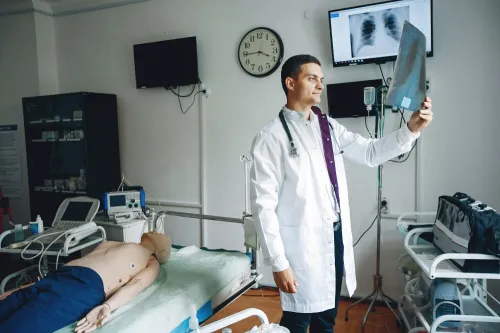
Before reporting to a dialysis unit, you need more than scrubs and classroom notes: missing documents, unclear permissions or unverified competencies can delay your posting. Use this checklist to organise each rotation day, identify what you may do under supervision, and record the evidence your clinical supervisor needs to sign off.
Key takeaways
- Carry identity documents, rotation logs, vaccination records and digital copies.
- Use gloves, mask, eye protection and hand hygiene at every patient contact.
- Check the machine, patient identity, prescription and vascular access before connection.
- Record observations, report emergencies, clean the station and obtain supervisor sign-offs.
Report Ready: Documents, PPE and a Day-by-Day Rotation Plan
Carry these documents in a labelled folder and keep digital copies on your phone:
- College identity card and hospital permission or posting letter
- Vaccination record, medical fitness certificate and insurance details
- Two passport photographs, emergency contact details and student ID
- Logbook, attendance sheet, pen and the host hospital’s induction forms
Wear a clean scrub suit and closed, non-slip shoes. Pack surgical masks, eye protection, disposable gloves, a hair cover and a waterproof apron if the unit requires one. Your dialysis technician student preparation is incomplete without the hospital’s written scope-of-practice, escalation policy, emergency contacts and occupational-health clearance requirements.
- Before Day 1: Obtain the current unit induction documents. Confirm biomedical-waste segregation, sharps disposal, blood-spill cleaning, needle-stick reporting, fire evacuation and transport arrangements for a deteriorating patient. Ask where to report and whom to call.
- Day 1: Complete orientation and observe hand hygiene, station cleaning, clean-contaminated separation and access-area practice. Do not perform a task without competency sign-off.
- Days 2–3: Under direct supervision, practise vital-sign measurement, pre-dialysis weight, documentation and equipment checks. Record each skill in your logbook.
- Days 4–5: Review patient identification, prescription matching, access inspection and emergency escalation. Practise structured handover with your supervisor.
Use this dialysis technician clinical rotation checklist in Pune as a prompt, not a substitute for the host unit’s rules. Hospital procedures override classroom assumptions.
Work Safely: Infection Control, Scope of Practice and Station Discipline
Get the rotation site’s written scope-of-practice and escalation policy before touching a patient. Your dialysis technician practical checklist should classify each task as observe, perform only after competency sign-off under direct supervision, or escalate. Follow the stricter instruction when site policy, instructor direction and prior training differ.
| Decision | Examples | Required action |
|---|---|---|
| Observe | Unfamiliar machine setup, catheter dressing change, access troubleshooting | Watch the trained clinician; do not handle equipment or access independently |
| Perform under direct supervision | Machine setup, circuit preparation, vital signs, documentation, cannulation | Complete only after sign-off, with the supervising nurse or technician present |
| Escalate | Prescription changes, anticoagulant-dose decisions, complications, machine repair | Stop, keep the patient safe and notify the responsible nurse or nephrologist |
Perform hand hygiene before and after contact, wear required PPE, dispose of needles immediately in a sharps container, and never prepare injectable medication outside the authorised process. Disinfect the chair or bed, machine exterior and high-touch surfaces between patients; do not carry contaminated supplies or medication trays to another station.
For a catheter, use a mask and aseptic technique, inspect the exit site and dressing, and report fever, redness or drainage immediately. For a fistula or graft, check for swelling, redness, bleeding, drainage, aneurysmal change, thrill and bruit under site policy; avoid blood pressure cuffs and venepuncture on that arm unless authorised.
Escalate blood leak, air alarm, needle dislodgement, severe hypotension, chest pain, dyspnoea, seizure, altered consciousness, anaphylaxis or suspected haemolysis. Follow the unit’s emergency protocol; never improvise or return blood after suspected haemolysis.
Before Connection: Machine, Patient and Vascular-Access Checks
Before the bloodline touches the patient, stop for any mismatch in identity, prescription, access condition or machine readiness. Obtain the unit’s written scope-of-practice and escalation policy before your first shift; competency sign-off controls what you may perform.
1. Confirm two patient identifiers, the nephrologist’s prescription, allergies, infection-control status, pre-dialysis weight and vital signs. Calculate the prescribed ultrafiltration volume and rate under supervision.
2. Match the dialyzer, bloodlines, dialysate concentrate, expiry dates, machine program, conductivity, temperature and alarms to the prescription. Check that the extracorporeal circuit is correctly assembled, primed and free of air or leaks. Perform setup only after machine and circuit-preparation sign-off.
3. Inspect an arteriovenous fistula or graft for redness, swelling, drainage, warmth, bleeding, abnormal thrill or absent bruit. Cannulation requires direct supervision. Never alter needle placement or troubleshoot access problems independently.
4. For a central venous catheter, perform hand hygiene, wear the required mask and use aseptic technique. Inspect the dressing and exit site for loosening, redness, drainage or fever; escalate suspected infection immediately. Do not remove or replace the dressing outside the approved procedure.
5. Measure and document findings before connection. Escalate chest pain, dyspnea, altered consciousness, severe hypotension, suspected hemolysis or any unresolved alarm; stop or clamp the circuit only as unit protocol authorizes.
A dialysis technician practical checklist should also confirm station disinfection, including the chair or bed, machine exterior and high-touch surfaces, before the next patient. Never carry potentially contaminated trays or supplies between stations.
During and After Treatment: Monitoring, Emergencies, Handover and Cleaning
Use the unit’s written observation frequency and escalation policy; do not rely on memory. A dialysis technician practical checklist separates signed-off tasks from restricted decisions.
1. Monitor blood pressure, pulse, respiratory rate, oxygen saturation, symptoms, access site, needle position, arterial and venous pressures, blood-flow rate, ultrafiltration rate, conductivity, temperature and machine alarms. Report sudden changes immediately.
2. Document readings at the required intervals, machine settings, treatment start and stop times, access condition, fluid removed, symptoms, interventions and the staff member notified. Record the prescribed treatment separately from what was delivered.
3. Escalate needle dislodgement, blood leak, air-detector alarm, loss of blood flow, severe hypotension, chest pain, dyspnoea, seizure, altered consciousness, anaphylaxis or suspected haemolysis. Activate the unit response, stay with the patient and stop or clamp the circuit only as authorised.
Never change a prescription, decide an anticoagulant dose, troubleshoot access independently or return blood after suspected haemolysis or major contamination.
4. For a catheter, use hand hygiene, a mask and aseptic technique; inspect the dressing and exit site for drainage or redness, and report fever or suspected infection. Do not remove or replace the dressing unless the site procedure and supervision allow it.
5. Before discharge, obtain post-dialysis observations, complete a structured handover covering access, treatment delivered, fluid removed, events, authorised medicines or blood products, unresolved symptoms and follow-up instructions. Confirm the patient is stable and transport arrangements are clear.
6. Disinfect the chair or bed, machine exterior and high-touch surfaces, segregate biomedical waste, discard sharps safely and manage spills per site policy. Dialysis clinical training in Pune requires the host hospital’s current cleaning and incident-reporting procedure.
Turn Attendance into Competence: Sign-Offs and Pune Site Induction
Attendance proves presence; a dated competency log proves supervised performance. For dialysis clinical training in Pune, ask both the training provider and host unit who observes each skill, who signs it, and what evidence the assessor expects.
1. Revise the treatment sequence: pre-treatment assessment, machine and circuit preparation, connection, monitoring, rinse-back or termination, access-site haemostasis, post-treatment assessment and cleaning. Practise weight-change, ultrafiltration-volume and ultrafiltration-rate calculations under supervision.
2. Carry a logbook or skills passport with dates, patient-safety observations, supervisor signatures and spaces for reassessment. A completed attendance sheet does not demonstrate competence in cannulation, catheter care, emergency response or documentation.
3. Obtain the host hospital’s written scope-of-practice and escalation policy. Confirm which tasks require sign-off, such as machine setup, circuit preparation, vital signs and documentation, and which require a registered nurse or nephrologist, including prescription changes, anticoagulant decisions, access troubleshooting and complication management.
4. Request the current induction pack before reporting. Check biomedical-waste segregation, sharps disposal, blood-spill and needle-stick procedures, vaccination or occupational-health clearance, emergency contacts, fire evacuation and patient-transport arrangements.
Ask whether assessment includes blood-flow rate, dialysate conductivity and temperature, ultrafiltration goal and achieved volume, pressures, symptoms, alarms, interventions, post-dialysis weight, access condition, haemostasis and disposition.
If K. P. Paramedical Institute is your provider, use these questions to test whether its posting arrangement supplies documented supervision at the named hospital, rather than assuming classroom preparation covers site rules. That is practical dialysis technician student preparation.
Related product
 | Best Dialysis The Dialysis Technician Course at K P Paramedical Institute is a career-oriented paramedical program designed to train students in the operation and... View product → |
Frequently asked questions
What documents should a dialysis technician student carry to a clinical rotation?
Carry a labelled folder with your identity documents, institute letter, rotation schedule, health and vaccination records, emergency contacts, competency logbook and required consent or induction forms. Keep digital copies on your phone.
What infection-control practices apply during dialysis clinical training?
Perform hand hygiene before and after patient contact, wear the PPE required by the site, use clean gloves for patient care, handle sharps immediately in a sharps container and disinfect the station between patients.
What should you check before connecting a patient to the dialysis machine?
Confirm the patient’s identity and prescription, inspect the machine alarms and visible lines, verify the dialyser and blood tubing, check the vascular-access site, record baseline observations and ask the supervising clinician to approve connection.
What should a dialysis technician student record after treatment?
Record observations, treatment settings, alarms, interventions, fluid removal, access condition, patient response and the handover details required by the unit. Dispose of waste safely, disinfect the station and obtain the supervisor’s sign-off.