Course titles in Pune do not reliably tell you whether you are comparing a short certificate, a diploma or a degree. By checking the award, eligibility, syllabus, equipment, supervised clinical hours and recognition documents, you can identify training that prepares you for safe entry-level imaging work rather than simply promising access to an X-ray machine.
Key takeaways
- Confirm the award, duration, eligibility and approving authority before applying.
- Match the syllabus to positioning, exposure, image processing and patient-care tasks.
- Ask to inspect X-ray equipment and confirm supervised clinical hours.
- Request radiation-safety records and verify recognition before paying fees.
Start with the Award, Eligibility and Course Structure
The award, not the phrase “X-ray technician course in Pune,” tells you what you are actually enrolling in. These labels are not standard: one institute may use them for a short certificate, another for a two-year diploma, while a “radiology course in Pune” may describe a broader imaging-technology program such as DRIT.
| Option | Course structure | Typical outcome |
|---|---|---|
| Certificate | Shorter training focused on basic radiography, patient handling, equipment operation and limited clinical practice | Entry-level assistant or technician work, subject to employer and qualification requirements |
| Diploma | Deeper study of anatomy, radiation physics, positioning, exposure selection, image evaluation, safety and supervised clinical work | Radiographer or X-ray technician roles where the awarding authority accepts the credential |
| Undergraduate imaging program | Broader and longer study covering X-ray, digital imaging, computed radiography, contrast procedures, quality control and clinical training | Wider allied-health imaging roles and progression to higher study |
| Radiologist pathway | Medical degree followed by specialist medical training; not a technician certificate or diploma | Doctor who interprets images and issues diagnostic reports |
Before applying, request the written eligibility rule. It must state the minimum qualification, required science subjects, minimum marks, age limit, accepted vocational or non-science backgrounds, attendance percentage, examination pattern, internship requirement and exact duration.
Then verify the awarding body: a private centre’s certificate is not automatically equal to a university degree, state-board diploma or nationally recognised allied-health qualification. Ask for the affiliation in writing and check the clinical site’s radiation-regulatory compliance separately. A machine demonstration without documented supervised clinical hours is not equivalent to workplace training.
Check the Syllabus Against Real Radiographic Work
A credible x ray technician course in pune teaches you to produce a safe, usable diagnostic image, not merely switch on an X-ray unit. Check the timetable for these subjects and skills:
- Radiation physics, X-ray production, exposure factors, inverse-square law and radiation dose.
- Human anatomy and physiology, with anatomy-specific positioning for chest, spine, skull, abdomen and extremities.
- Radiographic positioning, beam centring, collimation, source-to-image distance and patient instructions.
- Image production and evaluation, including density, contrast, sharpness, artefacts and repeat analysis.
- Computed radiography, digital radiography, image processing and basic quality control.
- Contrast studies, patient preparation, contrast-reaction awareness and emergency procedures.
- Patient care, infection control, communication, mobility assistance and handling patients in pain.
| Area | Weak syllabus | Credible syllabus |
|---|---|---|
| Radiation safety | A single safety lecture | Time, distance, shielding, dosimetry and pregnancy checks |
| Equipment | Machine operation | Technique selection, positioning, exposure control and fault reporting |
| Clinical work | Classroom demonstrations | Documented supervised examinations and competency checks |
| Image quality | “Good images” as a vague goal | Collimation, markers, artefact control and reject analysis |
Look for practical hours in the published timetable, not only “clinical exposure” in a brochure. The course should assess you on positioning, exposure selection, patient identification, radiation protection and image quality before awarding the credential. Also confirm that radiographers acquire images; radiologists are medical doctors who interpret them and issue reports.
Verify Equipment and Supervised Clinical Practice
A genuine placement is proved by documented, supervised examinations on functioning equipment at a named clinical site—not by watching an instructor expose a phantom in a classroom. Ask how many examinations you will perform and who will sign each entry.
Before choosing an X-ray training institute in Pune, verify the placement itself. A useful site has working general radiography equipment, regular patient volume, and a named qualified supervisor. It should also let students follow patient identification, positioning, immobilisation, infection control, exposure-factor selection, image critique, and examination documentation.
Ask the institute to show:
- The clinic or hospital name, address, and clinical-placement agreement
- The number of supervised examinations required and the internship logbook format
- The supervisor’s name, qualification, duty schedule, and student-to-supervisor ratio
- Recent attendance records showing where previous batches completed clinical hours
- The quality-control records and radiation-safety procedures students can observe
A machine listed in a brochure proves little if students only handle its controls during demonstrations. Request a visit during operating hours and watch whether students position patients, select exposure factors, review images, and record examinations under supervision. If access is restricted, ask for a written explanation.
Choose the course whose clinical hours, patient exposure, supervision, and logbook entries are verifiable. A certificate of attendance without repeated patient-based practice will not prepare you for independent radiographic work.
Treat Radiation Safety and Recognition as Admission Requirements
A lead apron does not prove that a training centre runs a safe radiography service. Before paying fees for a radiology course in pune, verify both the qualification’s academic recognition and the clinical site’s radiation compliance.
1. Ask for the exact awarding body: university, state board, or other named authority. Request the affiliation letter, sample certificate, duration, and examination pattern. The National Commission for Allied and Healthcare Professions Act, 2021 supports allied-health regulation, but it does not automatically recognise every course called “X-ray technician” or “radiology.”
2. Request the clinical facility’s current Atomic Energy Regulatory Board (AERB) authorisation or registration details, including the facility name and X-ray equipment covered. AERB records managed through e-LORA are stronger evidence than a “government approved” claim.
3. Inspect the room for controlled access, radiation warning signs, structural shielding, and a functioning exposure-control area. Ask to see the latest radiation survey, equipment quality-assurance records, and documented repeat-rate monitoring.
4. Confirm how students learn justification of examinations, patient positioning, collimation, safe distance, and exposure-factor selection. Ask whether personal dosimeters are issued through an approved monitoring service when the placement requires them.
5. Verify the placement agreement, named clinical supervisor, attendance log, patient volume, and internship logbook. A centre may own several machines while students perform no supervised examinations.
Refuse enrolment until the institute supplies these documents in writing. Compare evidence, not labels such as “X-ray training institute in Pune.”
Use a Document Checklist to Make the Final Pune Comparison
Do not choose on the course title alone. “X-ray technician course in Pune” and “radiology course in Pune” can describe different awards, durations and clinical workloads. Choosing the best x ray for course in pune means matching the credential to your eligibility and target role.
| Option | Check | Career fit |
|---|---|---|
| Certificate | Awarding body, duration and practical hours | Basic entry-level imaging support |
| Diploma | Affiliation, examination pattern and supervised clinical hours | Broader technician responsibilities |
| Degree or DRIT | University or recognised authority, eligibility and hospital training | Wider progression in imaging departments |
Ask each x ray training institute in pune for copies of these documents:
- Latest syllabus, sample certificate and affiliation letter naming the awarding authority
- Faculty qualifications, clinical-placement agreement and internship logbook format
- Attendance and examination rules, including minimum attendance and re-examination charges
- Tuition, examination, uniform, equipment, transport and placement-related costs
- Refund policy, payment schedule and records showing where previous batches completed training
- Clinical site details: patient volume, qualified supervisor, functioning equipment, quality-control records and AERB radiation-safety evidence
A private certificate is not automatically equal to a university degree, state-board diploma or nationally recognised allied-health qualification. Ask how the programme relates to the National Commission for Allied and Healthcare Professions Act, 2021, but demand the exact written recognition rather than accepting the Act’s name as proof.
K. P. Paramedical Institute belongs on the same comparison sheet: judge its documents, clinical hours and awarding authority against every Pune alternative, not against its advertising claims.
Related products
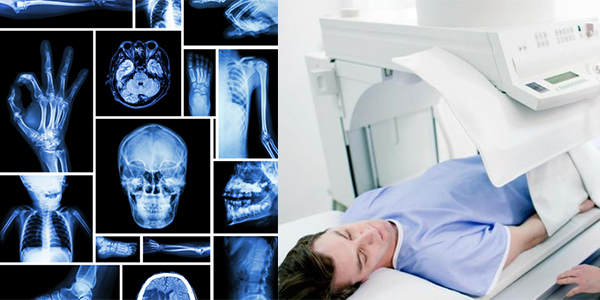 | Best X-RAY The X-Ray Technician Course at K P Paramedical Institute is a career-oriented paramedical program designed to prepare students for careers in... View product → |
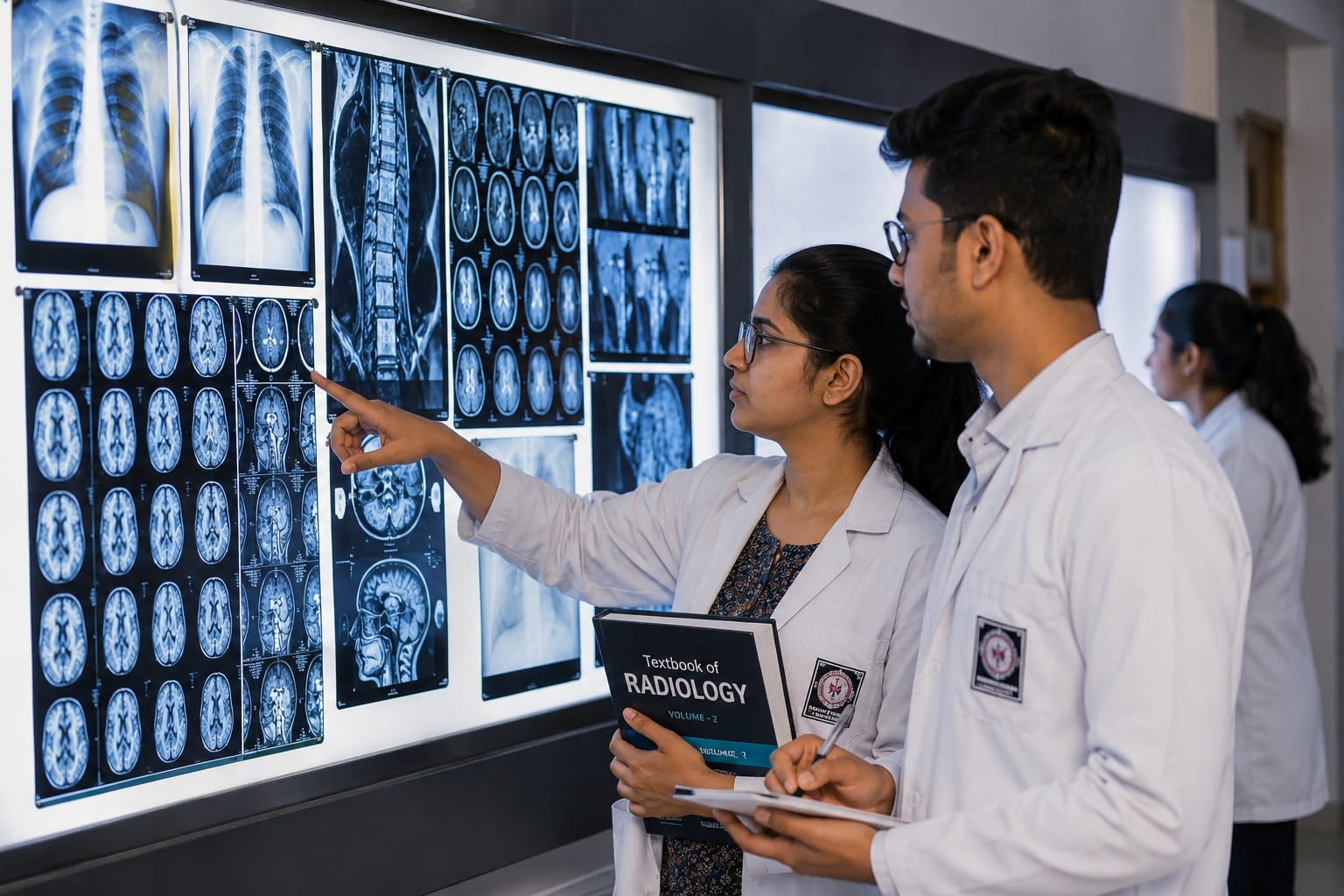 | Best DRIT The Diploma in Radiology & Imaging Technology (DRIT) at K P Paramedical Institute is a career-oriented paramedical program designed to prepare... View product → |
Frequently asked questions
What should you check first when choosing an X-ray course in Pune?
Check the exact award, eligibility rules, course duration, assessment method and issuing or approving authority. Course labels such as certificate, diploma and radiology course do not guarantee the same training or recognition.
What should an X-ray technician course syllabus include?
Look for patient positioning, exposure factors, anatomy, image processing, digital radiography, contrast procedures, infection control, patient care and practical assessment.
How can you verify clinical training at an X-ray training institute in Pune?
Ask which hospital or diagnostic centre provides training, how many supervised clinical hours are included, which examinations students perform and who signs their practical records. Inspect the available X-ray, computed radiography or digital radiography equipment.
Why do radiation safety and recognition matter for a radiology course in Pune?
Training should cover time, distance and shielding, dosimeter use, warning signs, controlled areas, pregnancy precautions and safe patient positioning. Request recognition documents and radiation-safety records before enrolling.
Which documents should you compare before admission?
Compare the award name, affiliation or approval document, eligibility criteria, syllabus, fee schedule, refund policy, clinical-training confirmation, practical-hours record and certificate sample.