
A dialysis unit depends on repeated, safety-critical steps: identifying the patient, preparing the machine and extracorporeal circuit, monitoring treatment, and escalating problems without delay. By the end, you will know which clinical skills, supervised practice details, course commitments, and institute records to check before choosing training in Daund.
Key takeaways
- Follow pre-session, treatment, and post-session checks in sequence.
- Escalate access problems, infection risks, alarms, and emergencies immediately.
- Confirm supervised clinical practice, assessment methods, and placement details before enrolling.
- Ask K. P. Paramedical Institute about fees, duration, eligibility, and clinical exposure.
What happens before, during and after a haemodialysis session?
A safe haemodialysis session follows a fixed sequence; students repeat it until omitted checks become harder to make.
1. Before treatment, verify the patient’s name against the identification record, check consent and the prescription, and record pre-dialysis weight and vital signs. Inspect the vascular access, confirm the dialyser and blood lines, prime the extracorporeal circuit, and check machine readings, water-treatment status, conductivity and alarms.
2. During treatment, observe the needle or catheter site, measure blood pressure and pulse at the unit’s prescribed intervals, and watch the circuit and arterial and venous pressure readings. Record treatment settings and alarms, then report abnormalities promptly to the nurse or nephrologist.
3. After treatment, disconnect under supervision and return blood or terminate treatment according to unit protocol. Achieve haemostasis, record post-dialysis weight and vital signs, dispose of the circuit, disinfect surfaces, clean the machine and complete the documentation.
Power interruption, water-treatment failure or an unsafe machine alarm requires protocol-based escalation. Do not bypass an alarm, restart equipment or invent a workaround; inform the nurse, nephrologist or designated technical staff.
Rehearsing this workflow is one of the main dialysis course benefits. It builds safer habits than memorising machine names alone. A practical dialysis technician course uses supervised sessions to make checking, monitoring, escalation and documentation routine.
How do students respond to access problems, infection risks and emergencies?
Safety training turns a symptom or alarm into escalation, not a solo fix. Students clean their hands before patient contact, before aseptic tasks, after body-fluid exposure, after glove removal, and after touching the patient or surroundings.
They use personal protective equipment—gloves, gown, mask and eye protection—when exposure risk requires it; handle access aseptically; inject safely; separate clean supplies from contaminated items; discard sharps in puncture-resistant containers; and clean blood spills and equipment with unit-approved disinfectant. These routines reduce blood-borne infection.
| Access | What it is | Key protection |
|---|---|---|
| Arteriovenous fistula | The patient’s artery is joined to a vein | Check the thrill and bruit; protect the arm |
| Arteriovenous graft | A synthetic tube connects artery and vein | Check for infection, bleeding and infiltration |
| Central venous catheter | A catheter enters a central vein | Keep the dressing and hubs aseptic; report drainage or fever |
Students inspect for bleeding, swelling, pain, redness, warmth, drainage, infiltration and a changed thrill or bruit. They protect the access arm and report concerns. Cannulation begins only after competency assessment and supervised approval under unit policy.
Immediate escalation covers:
- Hypotension with dizziness, nausea, weakness, cramps or faintness; chest pain; breathlessness; fever.
- Altered consciousness, severe cramps or disequilibrium symptoms.
- Air in the blood line, blood loss, clotting or repeated machine alarms.
Students stop or pause only under instruction and immediately alert the nurse or nephrologist. They do not diagnose, prescribe, change parameters without authorisation, bypass alarms or manage emergencies alone. Effective dialysis education in Daund, including dialysis technician training in Daund, rehearses these boundaries until safe reporting becomes automatic.
What does a dialysis technician do within the clinical team?
A dialysis technician provides technical and observational support; clinical decisions remain with licensed professionals. In a dialysis technician course, students practise this boundary through supervised work in hospital dialysis units, standalone dialysis centres and renal-care facilities.
- Prepare the machine, dialyser, blood lines and other consumables; inspect the extracorporeal circuit before connection.
- Support vascular-access care within assessed competence and report bleeding, swelling, pain, redness, drainage or other concerns.
- Confirm patient identification and privacy, then record pre- and post-treatment weight, vital signs, prescribed and delivered settings, alarms, adverse events and circuit condition.
- Give an accurate handover, including changes, incomplete tasks and concerns.
- Explain procedures respectfully in Marathi, Hindi and English, protect confidentiality and answer family questions without promising outcomes.
The registered nurse assesses the patient, gives authorised medicines or fluids, responds to deterioration and coordinates nursing care. The nephrologist diagnoses, prescribes dialysis and changes clinical treatment. A biomedical equipment technician handles equipment faults, maintenance and technical safety beyond the dialysis technician’s scope. A technician must not diagnose, prescribe or change settings independently.
The work involves prolonged standing, repeated monitoring, blood-contaminated equipment, patient anxiety and fatigue. Clinical exposure helps students in Daund build calm emergency communication and reliable documentation habits, but it does not grant independent clinical decision-making.
That distinction is how dialysis for training helps students in Daund prepare for supervised clinical work rather than practise beyond their role.
How can you judge whether a dialysis course is worth the time and cost?
A course is worth the cost only when it proves readiness through supervised practice, not a label. For dialysis technician training in Daund, compare the named syllabus and competencies, supervised clinical hours, documented sessions, machine brands and models, consumable access, and whether the site is a functioning dialysis unit.
Check that the program includes:
- Simulator, model and patient practice; qualified trainers; routine and emergency session observation; logbooks; demonstrations; practical assessments; competency sign-offs; written examinations; and stated pass requirements.
- Water-room orientation covering pretreatment, reverse osmosis or equivalent purification, disinfectant checks, conductivity, alarm interpretation and maintenance records.
- Access to dialysers, blood lines and other consumables, rather than demonstrations without hands-on setup.
These details reveal the real dialysis course benefits. Ask how students respond to a failed water-quality check or machine alarm; bypassing either is unsafe.
| Program | Daily work | Patient contact, equipment, risk and records |
|---|---|---|
| Medical laboratory | Specimen collection and testing | Less direct contact; analysers; specimen and result documentation |
| ECG | Lead placement and recordings | Brief contact; ECG machine; positioning and trace records |
| Radiology | Imaging preparation and assistance | Patient positioning; X-ray or ultrasound equipment; radiation or imaging safety records |
| OT technician | Theatre preparation and instrument support | Direct contact; surgical equipment; blood exposure and count documentation |
Calculate entry requirements, duration, tuition and examination fees, registration obligations, uniform, footwear, personal protective equipment, travel, attendance, shift timing, internship terms and travel time from nearby towns. Dialysis education in Daund suits you if you accept biology, infection-control rules, technical equipment, careful records and direct patient contact.
It is a poor fit if you want laboratory-only work, avoid blood exposure or shifts, or expect independent clinical decisions.
What should you ask K. P. Paramedical Institute before enrolling?
Ask for documents, not assurances, before paying for a dialysis technician course. These questions show how dialysis training helps students in Daund prepare for supervised duties in a functioning unit.
1. Ask for the exact award name printed on the final certificate, the affiliating or examining body, the applicable recognition or registration pathway, entry requirements, total fees, examination charges, refund terms and expected completion time.
Request the written syllabus, clinical-rotation timetable, minimum practical hours, minimum supervised cases, attendance rule, shift schedule, logbook format, practical rubric and pass criteria.
2. Confirm whether clinical practice takes place in Daund. Record the hospital or dialysis centre’s name and type, placement agreement, supervisor’s designation, transport expectations, internship documentation and the action taken if no placement is available.
3. Ask to see the machine brands and models, dialysers, blood lines, access models, simulators, water-treatment area and cleaning supplies used for teaching. Confirm that students practise priming, connection, disconnection, access observation, vital-sign monitoring, alarm response, documentation and post-session cleaning on patients only under supervision.
4. Ask about trainer qualifications, emergency drills, confidentiality teaching, post-course documentation, employer introductions and support after graduation. K. P. Paramedical Institute should be able to explain how these items are assessed, recorded and signed off rather than relying on a course label.
Unclear answers about clinical access, supervised cases or the final certificate are reasons to pause enrolment and compare another dialysis education in Daund provider.
Related product
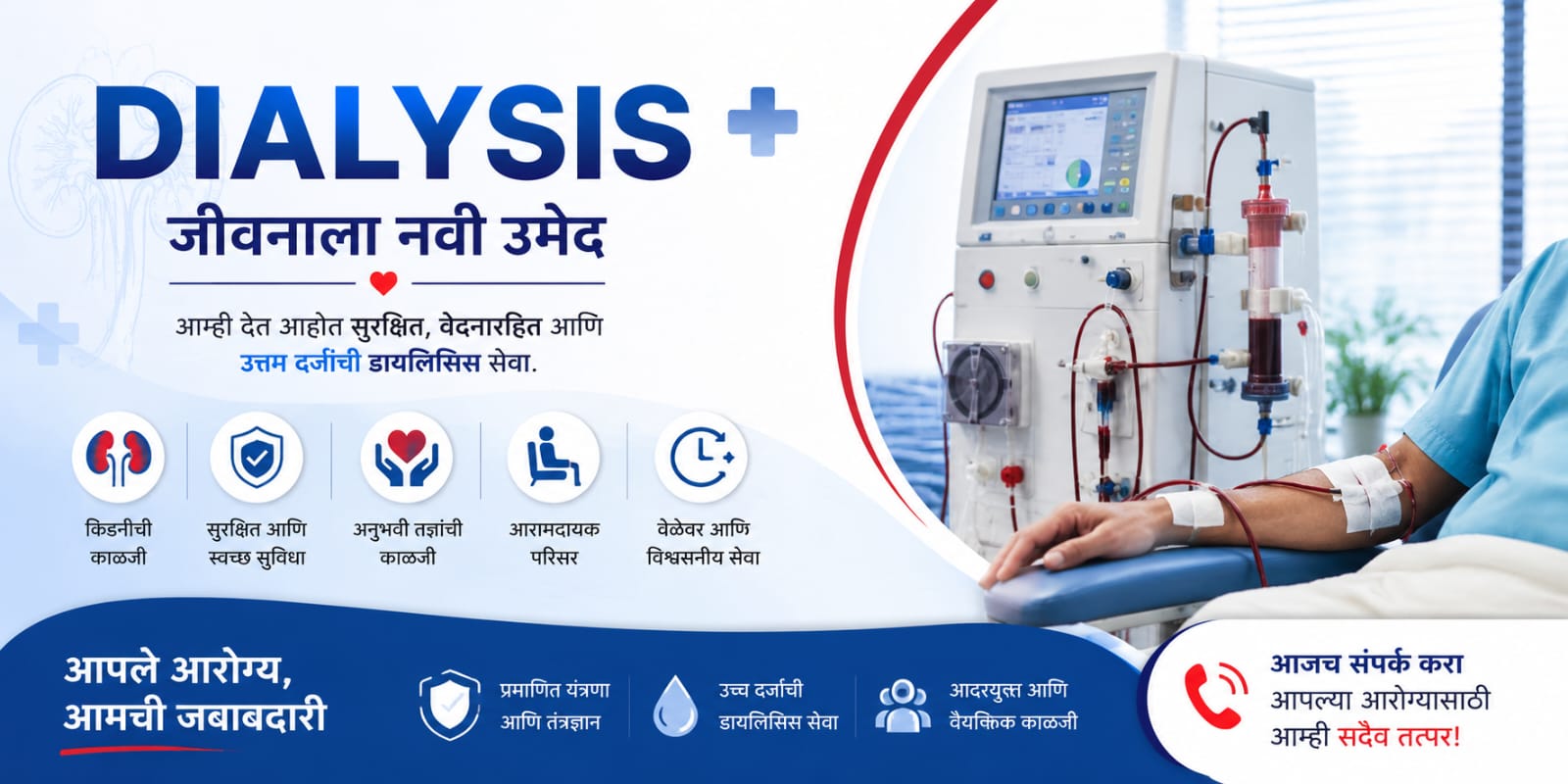 | Best Dialysis The Dialysis Technician Course at K P Paramedical Institute is a career-oriented paramedical program designed to train students in the operation and... View product → |
Frequently asked questions
What happens before, during, and after a haemodialysis session?
Students learn patient identification, vital-sign checks, machine preparation, access checks, treatment monitoring, documentation, and safe equipment disposal.
How do students respond to access problems, infection risks, and emergencies?
They practise recognising abnormal findings, pausing or escalating concerns, following infection-control steps, responding to alarms, and calling the appropriate clinical professional.
What does a dialysis technician do within the clinical team?
A dialysis technician prepares equipment, supports treatment monitoring, records observations, maintains safety standards, and reports changes to nurses or doctors.
How can you judge whether a dialysis course is worth the time and cost?
Compare supervised clinical hours, equipment access, assessment methods, placement arrangements, total fees, eligibility, and the skills taught.
What should you ask K. P. Paramedical Institute before enrolling?
Ask about course duration, eligibility, fees, practical sessions, clinical placements, faculty experience, assessments, certificates, and attendance requirements.