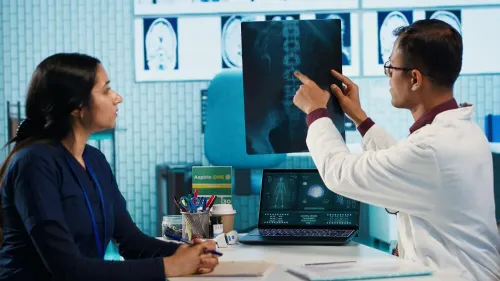
An OT technician works inside a surgical workflow, not as a surgeon, anaesthetist or general bedside nurse. The right comparison depends on the setting, equipment, patient contact, qualification level and supervised practice each course provides, so you can match your choice to the work you actually want to do.
Key takeaways
- Choose OT training for procedure-room preparation, equipment checks and sterile teamwork.
- Compare ECG, dialysis, imaging and laboratory work by patient contact and daily duties.
- Ask whether practical training includes instrument handling, infection control and emergency readiness.
- Check whether the course is a certificate, diploma, advanced diploma or B.Sc. route.
What does an operation theatre technician do during a working day?
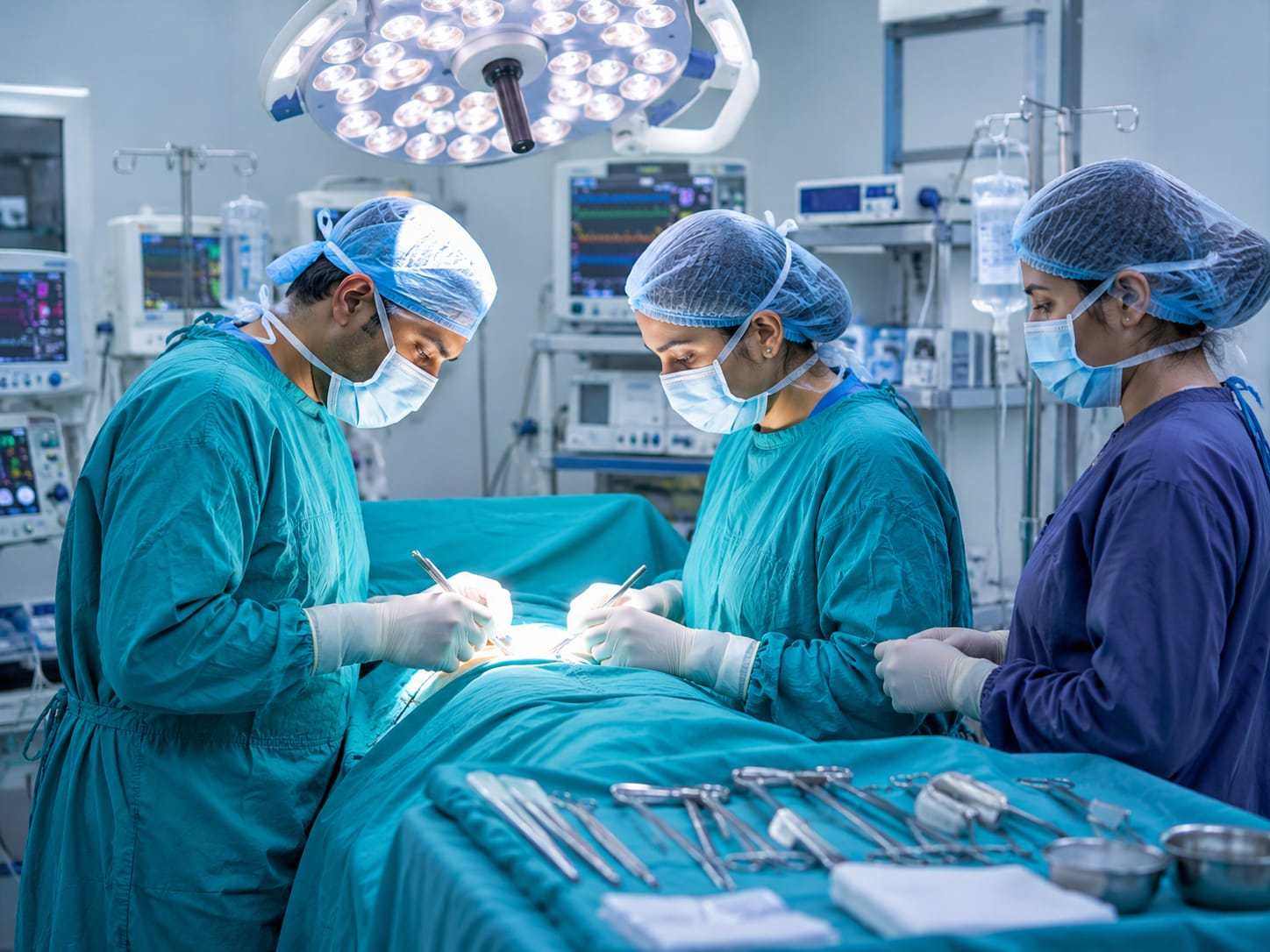
An operation theatre technician in Daund starts before the patient enters: they prepare the room, check suction and cautery equipment, confirm lights and monitors, and arrange instruments for the planned procedure. During emergencies, the same readiness work happens faster and with changing priorities.
| Responsibility | Typical working-day tasks | Boundary |
|---|---|---|
| Sterile-field duties | Open sterile packs, arrange instruments, protect the sterile field, pass items under direction, count swabs and instruments, and handle specimens correctly | Do not perform surgery or make surgical decisions |
| Equipment and room readiness | Test suction, cautery, operating table, lights and basic anaesthesia equipment; report faults before incision | Do not administer anaesthesia independently |
| Patient-care support | Help transfer and position the patient, attach basic monitoring equipment as directed, maintain privacy, and move the patient to recovery | Do not diagnose, prescribe medicines or replace nursing assessment |
| Team workflow | Anticipate requested instruments, document items and specimens, restock supplies, and send used devices for decontamination or CSSD processing | Work under surgeons, anaesthetists and registered nurses |
The general patient-care portion continues outside the sterile field. You may help with safe movement, positioning, transport to recovery and routine observations assigned by the clinical team, but nursing covers broader assessment, medicines and care planning.
An OT technician course in Daund suits someone who prefers procedure-centred work over specimen analysis in a medical laboratory technology course. Laboratory staff process and quality-check samples; an operation theatre technician in Daund stays focused on real-time theatre readiness, sterile technique and rapid support during scheduled and emergency procedures.
How does OT training compare with ECG, dialysis, imaging and laboratory pathways?
Choose OT if you want procedure-room work; choose ECG, dialysis, imaging or laboratory training if you prefer a narrower technical station.
| Pathway | Clinical setting | Equipment and core tasks |
|---|---|---|
| OT technician | Operating theatre and sterile-services areas | Prepare sterile instruments, check suction and cautery, support positioning and transfers, maintain counts and assist the surgical team |
| ECG technician | Cardiac diagnostic unit, clinic or ward | Operate a 12-lead ECG machine, place electrodes correctly and produce readable tracings |
| Dialysis technician | Dialysis centre or renal ward | Prepare the dialysis machine, check bloodlines and dialysate, monitor pressures and respond to alarms |
| X-ray technician | X-ray room | Position patients, operate the X-ray unit, apply radiation-protection measures and acquire diagnostic images |
| Radiology and imaging | Imaging department | Work with X-ray, CT, MRI or ultrasound systems, manage patient positioning, protocols, safety and image quality |
| Medical laboratory technician | Pathology laboratory | Label and process blood, urine and other specimens, run analysers and follow quality-control procedures |
| Naturopathy | Wellness clinic or natural-health centre | Support non-drug therapies, lifestyle guidance and supervised natural treatment plans |
| Undergraduate laboratory course | Hospital, research or diagnostic laboratory | Build broader knowledge of biochemistry, microbiology, pathology, instruments and laboratory quality systems |
OT training involves rapid coordination during procedures and sustained exposure to sterile technique. Medical laboratory work centres on specimen accuracy and analytical quality, while imaging centres on equipment, positioning and radiation or magnetic-field safety.
The label paramedical courses in Daund proves neither recognition nor registration eligibility. Compare the exact award, awarding body, affiliation or approval number, examination authority and clinical posting before enrolling.
Which healthcare course best matches your preferred work conditions?
Choose the course whose routine matches your tolerance for contact, urgency and physical work. An OT technician course versus healthcare courses in Daund comparison is less about the title and more about where you want to stand during a shift.
| Option | Patient contact and exposure | Shifts, emergencies and physical demands |
|---|---|---|
| OT technician | Close contact during transfers and positioning; regular exposure to blood, tissue and bodily fluids under sterile controls | Early starts, prolonged standing, strict timing and emergency call-ins; high-consequence infection-control work |
| Nursing | Continuous bedside contact, including personal care, medication and wound care; bodily-fluid exposure | Ward, community and night shifts; broad responsibility for assessment, care planning and patient monitoring |
| Emergency medical technician | Contact begins at the incident; blood and bodily-fluid exposure during first response and stabilisation | Ambulance and emergency work, unpredictable hours, rapid decisions, lifting and transport |
| Medical laboratory | Limited bedside contact; specimens require careful handling and contamination control | Laboratory schedules, repetitive bench work and quality-control duties; less operating-room pressure |
| Radiology or imaging | Patient positioning and examination support; exposure to bodily fluids is usually lower than in theatre | Departmental shifts; standing, equipment operation and radiation-safety procedures |
Choose OT if you prefer procedure-centred teamwork, sterile technique and operating-room pressure. Choose nursing for the widest patient-care scope, or EMT for ambulance and pre-hospital response. ECG, dialysis, naturopathy and laboratory routes suit different mixes of monitoring, ongoing treatment, wellness care and analytical work.
What practical training should you verify before choosing an OT course?
A credible OT technician course in Daund should let you demonstrate each core task, not merely describe it in lectures. Ask whether supervised theatre postings cover general surgery, orthopaedics, obstetrics and emergency cases, and whether the placement is guaranteed in writing.
| Skill area | What to verify | Warning sign |
|---|---|---|
| Instrument identification | Practise naming common forceps, retractors, clamps, needle holders and their uses | Students memorise diagrams but cannot handle instruments |
| Sterility and CSSD | Perform surgical hand scrub, gowning, gloving, pack inspection, autoclave loading and CSSD workflow | No access to a sterilisation unit |
| Equipment readiness | Check suction tubing, collection bottles, cautery cables, grounding pads and alarms | Equipment is demonstrated but never checked by students |
| Patient and specimen safety | Practise positioning, pressure-point protection, swab and instrument counts, specimen labelling, sharps disposal and biomedical-waste segregation | No documented safety checklist |
- Confirm that tutors make you identify a break in sterility and correct it without contaminating the field.
- Ask how often you practise surgical counts and what happens when a count does not reconcile.
- Verify training in basic life support, patient transfer, airway-support assistance and recovery-room handover. An OT technician does not perform surgery or independently administer anaesthesia.
- Ask for the posting schedule, supervisor’s name, logbook format and minimum supervised hours. A verbal hospital tie-up is not proof of clinical exposure.
For an operation theatre technician in Daund, readiness means responding safely during a live procedure. Choose training that records observed competencies, not attendance alone.
How do certificate, diploma, advanced diploma and B.Sc. routes differ?
A course title does not tell you its employment value. Short certificates, roughly one-year programmes, two-year diplomas, advanced diplomas and multi-year B.Sc. routes can all appear in paramedical courses in Daund, yet differ in syllabus, examinations and eligibility.
| Route | Duration and entry | Award and authority | Progression and recruitment |
|---|---|---|---|
| Certificate | Short; entry may be after Class 10 or 12 | Certificate from the named provider or board; verify affiliation and approval number | Useful for entry-level support only when a vacancy accepts it |
| Diploma | About one or two years; Class 12 is common, but check the prospectus | Diploma issued through the stated board, university or institute; results must come from a named examination authority | Can support technician applications when the vacancy specifies that diploma |
| Advanced diploma | Duration and entry vary; some require a prior certificate or diploma | Confirm whether it is an independent qualification or an upgraded internal award | May improve progression, but does not replace a recruitment rule requiring a degree |
| B.Sc. | Multi-year undergraduate route; Class 12 science and subject requirements apply | Degree-awarding university, with documented affiliation and examination system | Opens degree-level applications where the employer demands B.Sc.; registration rules still apply |
Before paying, ask for the prospectus, syllabus, internship requirement, awarding-body name, affiliation letter, examination regulations and sample certificate. K. P. Paramedical Institute can be one provider you investigate using those documents, not evidence that every similarly named programme is equivalent.
For an OT technician course versus healthcare courses in Daund, read actual hospital vacancy notices. Check whether they demand a specific diploma or degree, approved institution, internship, registration or document verification; an OT title alone guarantees none of these.
Related products
 | Best OT Technician The Operation Theatre (OT) Technician Course at K P Paramedical Institute is a career-focused paramedical program designed to train students in the... View product → |
 | Best ECG The ECG Technician Course at K P Paramedical Institute is a career-focused paramedical program designed to train students in electrocardiography... View product → |
Frequently asked questions
What does an operation theatre technician do during a working day?
An operation theatre technician prepares the room, checks suction, cautery, lights and monitors, arranges instruments, supports sterile workflow and responds to changing priorities during emergencies.
How does an OT course compare with ECG, dialysis, imaging and laboratory courses?
OT training focuses on operating-room preparation and surgical teamwork. ECG courses focus on cardiac recordings, dialysis courses on renal replacement treatment, imaging courses on diagnostic scans and laboratory courses on specimen testing.
Which healthcare course best matches different work conditions?
Choose OT for procedure-room work and fast-changing priorities; ECG for focused cardiac testing; dialysis for repeated patient-care routines; imaging for equipment-based diagnostics; and laboratory training for specimen handling and testing.
What practical training should you verify before choosing an OT course?
Ask whether training includes operating-room setup, instrument identification, infection control, sterilisation workflow, suction and cautery checks, patient transfer, emergency readiness and supervised clinical practice.
How do certificate, diploma, advanced diploma and B.Sc. routes differ?
They differ in study depth, duration, academic level and progression options. Compare the syllabus, practical hours, clinical placement, eligibility, assessment method and next-study opportunities before enrolling.
Related products
 | Best Dialysis The Dialysis Technician Course at K P Paramedical Institute is a career-oriented paramedical program designed to train students in the operation and... View product → |
 | Best X-RAY The X-Ray Technician Course at K P Paramedical Institute is a career-oriented paramedical program designed to prepare students for careers in... View product → |
 | Best DRIT The Diploma in Radiology & Imaging Technology (DRIT) at K P Paramedical Institute is a career-oriented paramedical program designed to prepare... View product → |
 | Best Lab Technician The Advanced Diploma in Medical Laboratory Technology (ADMLT) at K P Paramedical Institute is a career-focused paramedical program designed to... View product → |