A DNYS prospectus should show more than the words “naturopathy” and “yoga.” You will be able to map the expected subjects, practical training, assessments, entry rules and recognition details, then use a focused checklist to compare a Baramati course before paying admission fees.
Key takeaways
- DNYS covers health science, naturopathy therapies and yoga practice.
- Confirm the current syllabus, awarding body and examination pattern in writing.
- DNYS is a diploma, not the five-and-a-half-year BNYS degree.
- Check practical hours, internship arrangements and certificate verification before enrolling.
Which subjects are included in a DNYS syllabus?
A typical DNYS syllabus combines basic health science with naturopathy and yoga training. It is diploma-level education, not the five-and-a-half-year BNYS degree. The subjects below are common in a naturopathy diploma course, but the exact Baramati list must come from the current prospectus because no single national DNYS syllabus fixes every paper or practical.
Typical subject areas include:
- Human anatomy and physiology
- Basic health, disease, hygiene and first aid
- Naturopathy philosophy, principles and history
- Diet, nutrition, fasting and lifestyle counselling
- Naturopathic therapies, including hydrotherapy and massage
- Yoga theory, asanas, pranayama, relaxation and meditation
- Practical yoga instruction, case records and supervised demonstrations
| Subject area | Common coverage | Confirm in the Baramati prospectus |
|---|---|---|
| Anatomy and physiology | Body systems, structure and basic functions | Paper names and teaching hours |
| Naturopathy | Principles, diet, fasting, hydrotherapy and massage | Therapy practicals and supervision |
| Yoga | Theory, asanas, pranayama and meditation | Demonstration requirements and pass marks |
| Clinical support | Hygiene, first aid, health observation and records | Internship, project or fieldwork rules |
Also check whether written theory papers, internal assignments, attendance marks, practical examinations or a case record are required. The prospectus should name the issuing authority, examination pattern and current subject list; do not treat the label “DNYS” alone as proof that two courses have identical content.
How are DNYS classes, practicals and examinations structured?
A credible DNYS course states its duration, number of academic years and total teaching hours in writing. Check how those hours divide between classroom theory, yoga practice, demonstrations, supervised treatment and fieldwork; a recorded-lecture course is not equivalent to clinical training.
These details form the core of what is included in a DNYS course in Baramati.
Before enrolling, verify:
- The course duration and whether study is divided into one or more academic years.
- Weekly teaching hours and the number of classroom theory sessions.
- Scheduled practice in asana, pranayama, meditation, relaxation and yogic cleansing.
- Demonstrations of naturopathy procedures, followed by supervised student practice.
- Clinical or fieldwork hours, treatment-room access and case-record requirements.
- Minimum attendance for classes, practicals, examinations and fieldwork.
- Internal assessment through assignments, attendance, class tests, projects or case records.
- Final written papers, practical examinations, required demonstrations and published pass marks.
Ask for the current examination scheme rather than relying on the acronym DNYS: pass marks and practical requirements are not uniform. DNYS course details in Baramati should show whether internal marks contribute to the final result, whether failed practicals can be repeated and which examination body issues the marksheet.
A course that offers theory but no supervised demonstrations, treatment practice or fieldwork leaves you without evidence of practical competence.
What practical skills should you learn by the end of the course?
By completion, you should be able to support a client safely within a defined, non-medical scope. A credible yoga sciences course in Baramati should assess these abilities in demonstrations, case work and supervised practice—not through recorded lectures alone.
- Take a basic health history, including the client’s symptoms, previous conditions, medicines, allergies and goals.
- Observe posture, movement, breathing, skin changes and signs that require referral rather than treatment.
- Record dates, findings, advice, procedures, follow-up and referrals in a clear case record.
- Demonstrate suitable asanas, pranayama, relaxation methods and basic yogic cleansing practices with safe instructions.
- Plan a yoga session with an objective, sequence, duration, modifications and a method for monitoring the client.
- Prepare practical lifestyle or diet guidance that matches the client’s stated needs without claiming to diagnose disease.
- Apply hydrotherapy methods or basic massage techniques only during supervised training and within the procedures permitted by the course.
- Provide basic first aid, recognise danger signs and refer urgent or complex cases to a qualified medical professional.
Check whether the DNYS syllabus names the equipment, demonstrations, case records and supervised hours required for these tasks. Ask how practical work is assessed and who supervises it. A diploma may prepare you for supervised wellness, yoga-instruction or naturopathy-support work; it does not make you a doctor, nurse, physiotherapist or BNYS graduate.
Who can enrol, and what recognition does the diploma have?
Before paying a fee, confirm the entry rules in the current prospectus. Searches for dnys course details in Baramati can show different versions of the same course title, including 10th-pass, 12th-pass and graduate-entry routes.
Check these points in writing:
- Minimum education and whether Biology, Science or another subject is compulsory
- Minimum and maximum age, if an age limit applies
- Language of instruction and examination
- Required documents: marksheets, leaving certificate, identity proof, photographs and domicile proof
- Selection method, whether merit, interview or direct admission
- Course duration, attendance percentage and consequences of shortage
Ask for the name of the awarding authority, its university or board affiliation, approval or affiliation number, examination body and a sample marksheet. “Diploma” alone does not prove government recognition or eligibility for a regulated clinical post. Confirm acceptance with the employer or registration authority you intend to approach.
| Qualification | What it means | Scope to confirm |
|---|---|---|
| DNYS diploma | Diploma-level naturopathy and yoga training | Basic wellness and supportive practice within stated training |
| Certificate | Shorter or narrower course award | Limited to the certificate provider’s claims |
| Private wellness course | Provider-issued training | No automatic university or government equivalence |
| BAMS | Bachelor of Ayurvedic Medicine and Surgery | Separate medical degree and regulatory route |
| BNYS | Five-and-a-half-year undergraduate degree recognised by the Ministry of AYUSH | Broader degree route; not equivalent to DNYS |
Use the prospectus and marksheet format—not the label alone—as your evidence when comparing naturopathy diploma course details.
What should you check before choosing a DNYS course in Baramati?
Do not enrol from the course title alone. The phrase “what is included in dnys course in baramati” has no single answer because each provider, board or affiliating body can set its own syllabus, assessment rules and certificate terms. Ask for current documents before paying.
- Request the approved or provider-issued syllabus, course duration and issuing authority.
- Get faculty names, qualifications and teaching responsibilities in writing.
- Inspect the yoga hall, therapy rooms, equipment and hygiene arrangements.
- Confirm scheduled supervised clinical access, case records and practical demonstrations.
- Ask for the minimum attendance percentage and the process for missed sessions.
- Check internal assignments, theory papers, practical examinations, projects and final examination rules.
- Demand a fee schedule showing tuition, examination, practical, registration and refund charges.
- Obtain written confirmation of recognition, affiliation, marksheet format and the diploma’s professional scope.
Use the same questions for K. P. Paramedical Institute that you would use for any local provider. A “yoga sciences course in baramati” should show assessed asana, pranayama, meditation and therapy practice, not only recorded lectures.
| Evidence | What it confirms | Warning sign |
|---|---|---|
| Current prospectus and syllabus | Subjects, duration and assessment structure | Staff rely on verbal promises |
| Named faculty and facilities | Who teaches and where practice occurs | No names or inspection allowed |
| Recognition letter and sample marksheet | Awarding body and certificate status | Claims BNYS equivalence without a legal basis |
| Written fee document | Total cost and payment conditions | Cash-only or changing charges |
Related product
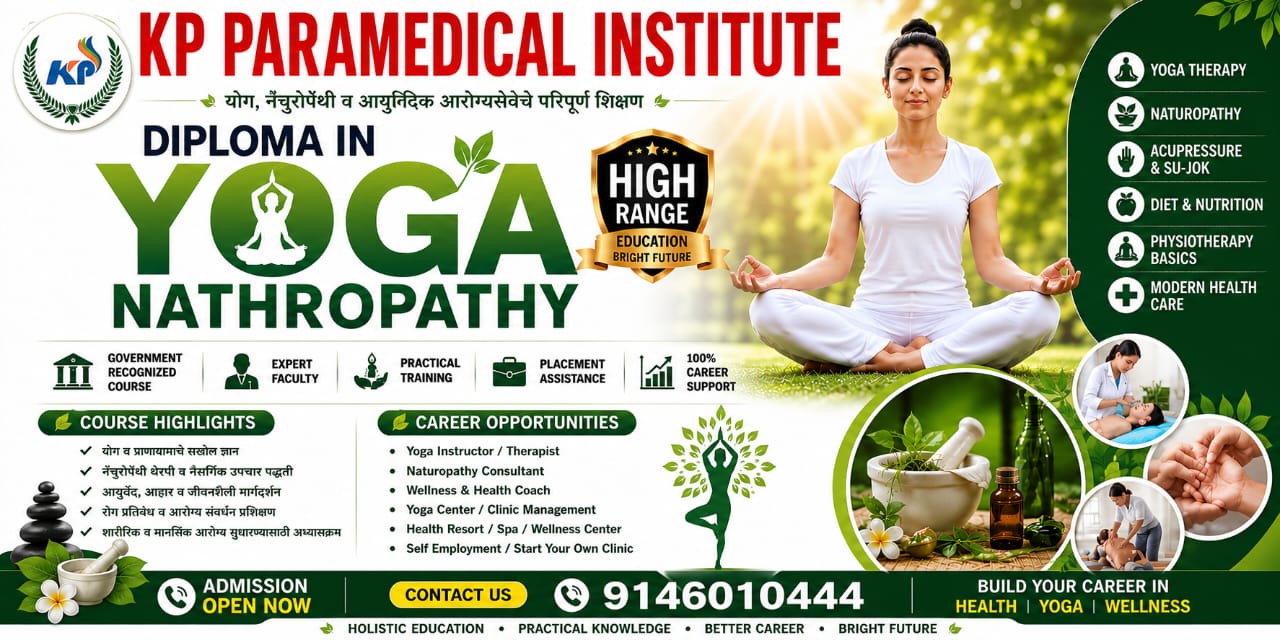 | Best DNYS The Diploma in Naturopathy and Yogic Sciences (DNYS) at K P Paramedical Institute is a career-oriented program designed for students who wish to... View product → |
Frequently asked questions
Which subjects are included in a DNYS syllabus?
A typical DNYS syllabus includes basic anatomy, physiology, hygiene, nutrition, naturopathy principles, therapeutic methods and yoga sciences. The exact papers vary by institution and awarding body.
How are DNYS classes, practicals and examinations structured?
Courses usually combine classroom lessons, supervised practical sessions and written or practical examinations. Ask the institute for the current timetable, attendance rule, practical-hour requirement and examination scheme.
What practical skills should you learn by the end of the course?
You should practise client history-taking, basic observations, yoga instruction, nutrition guidance and approved naturopathy procedures under supervision. The institute should identify each skill in its practical record or syllabus.
Who can enrol in a DNYS course, and what recognition does the diploma have?
Eligibility depends on the institution and awarding body, so check the required school qualification and documents. A DNYS diploma is not equivalent to a BNYS degree; verify who issues it and where employers accept it.
What should you check before choosing a DNYS course in Baramati?
Check the prospectus, awarding-body details, affiliation evidence, syllabus, practical facilities, internship terms, fees, attendance requirements, examination process and certificate-verification method.