Choosing between a DRIT, a radio imaging technology course, and an X-ray technician course requires more than comparing course names. You will be able to judge each option by its qualification level, modality coverage, supervised practice, radiation-safety training, recognition, and realistic entry-level scope.
Key takeaways
- Confirm the awarding body, qualification level and exact course title.
- Compare X-ray, CT, MRI and ultrasound coverage with the job you want.
- Ask for clinical placement details, radiation-safety training and supervised hours.
- Check eligibility, assessment, recognition and progression before paying fees.
Start with the qualification, not the acronym
Start with the awarding body and qualification level, not the acronym. “DRIT” is not a universally standardised Indian title, so two institutes can use it for courses with different duration, eligibility, syllabus and clinical exposure. A DRIT versus other imaging courses in Baramati comparison is meaningful only after you verify those details.
| Course label | What to verify | What the title alone cannot prove |
|---|---|---|
| DRIT certificate or diploma | Awarding body, duration, eligibility, syllabus and clinical site | Whether training extends beyond basic radiography |
| X-ray technician course | Credential level, projection-radiography syllabus and supervised practice | Whether portable X-ray, CR, DR or fluoroscopy assistance is included |
| Degree-level radiography course | University, current approval, clinical hours and assessment method | Whether every listed modality receives hands-on teaching |
A sound DRIT course comparison separates image acquisition from diagnosis. Technicians prepare patients, follow protocols, position them and acquire safe, technically adequate images; qualified radiologists or authorised clinicians handle formal interpretation and reporting.
Before paying, request these records in writing:
- The exact credential name and awarding or affiliating authority
- Current approval for the intake year, verified directly with that authority
- The complete syllabus, practical timetable and clinical placement agreement
- Assessment rules, logbook requirements, competency sign-offs and total fees
Treat “advanced imaging” as an unverified claim until the institute names the equipment, supervised hours and student duties. A familiar acronym cannot replace documentary proof.
Compare modality coverage and the work each course prepares you to do
An X-ray technician course is useful for entry-level radiography only when it includes more than classroom projection diagrams. Check whether it covers plain radiography on computed radiography (CR) and digital radiography (DR) systems, portable X-ray, trauma positioning, and assistance with contrast or fluoroscopy; these skills determine whether you can work beyond a routine imaging room.
| Option | Modality coverage | Work it prepares you for |
|---|---|---|
| DRIT diploma | Plain radiography, portable X-ray, CR and DR; CT, MRI, ultrasound, mammography and fluoroscopy exposure where listed | Radiography departments, outpatient centres, emergency imaging and supervised support in broader departments |
| Radio imaging technology course | Broader anatomy, positioning, radiation physics and image acquisition, with advanced-modality rotations if the institute has access | Wider technician pathways and a stronger base for further study; verify that “advanced imaging” means hands-on cases |
| Single-modality X-ray course | Projection radiography, with portable X-ray, contrast procedures or fluoroscopy only if specifically included | Basic X-ray-room or assistant-level work; limited access to CT, MRI and specialised imaging roles |
A strong DRIT or radio imaging technology course should teach radiation protection as daily practice: justify examinations, collimate, shield, check pregnancy when relevant, position patients correctly, reduce repeats and use personal monitoring. It teaches image acquisition, not radiologist-level diagnosis or reporting.
For radiology courses in Baramati, ask for the modalities available for supervised patient rotations, clinical weeks, documented case numbers, night or emergency exposure, logbooks and competency sign-offs. Observation alone does not prove readiness for portable X-ray, CT, MRI or contrast work.
Test the practical training, clinical placement and safety controls
Require a named clinical placement before enrolling in imaging technician training. “Internship” is not enough: an unpaid period spent on reception, cleaning or observation does not equal supervised imaging practice.
1. Ask for the placement duration, department rotations, attendance rule and assessment method. Confirm that you will perform supervised work in the modalities listed by the course, rather than watch demonstrations. Request a sample logbook showing daily entries and competency sign-offs.
2. Verify hands-on radiography skills: patient identity and examination checks, positioning, collimation, exposure selection, portable radiography, trauma positioning and image evaluation. Ask who supervises each procedure and how many supervised examinations you must complete before sign-off.
3. Test the radiation-safety teaching in the radio imaging technology course. You should practise examination justification, exposure optimization, shielding, pregnancy checks where relevant, repeat-image reduction and personal dosimeter use. A theory lecture alone will not prevent unnecessary exposure or repeated images.
4. Check patient-care and emergency competencies. Training should include infection prevention, safe patient transfers, communication with anxious or non-cooperative patients, basic emergency response and escalation of contrast reactions or other adverse events. Ask whether night, emergency and trauma shifts are included; a placement limited to quiet daytime observation leaves major gaps.
Verify duration, eligibility, assessment and recognition before paying
Before paying, obtain a dated written offer, not a brochure promise. A useful DRIT course comparison must show the awarding or affiliating body, course level, duration, eligibility, assessment and clinical obligations. Ask the named body to confirm the institute and intake year; a logo or old affiliation is not proof of recognition.
| Option | Verify in writing | Why it matters |
|---|---|---|
| DRIT | Diploma level, awarding body, full modality syllabus, clinical weeks and supervised case log | Broader training may include radiography, CT or MRI, but the acronym does not guarantee access |
| X-ray technician | Certificate or diploma level, projection radiography, portable X-ray, CR/DR, fluoroscopy assistance and placement | A single-modality route can leave gaps for CT, MRI or advanced roles |
For radiology courses in Baramati, request the fee schedule with registration, examination, uniform, equipment and re-examination charges separated. Get the eligibility documents, attendance threshold, internal and final assessment format, pass rules and certificate issue timeline.
Also ask for:
- Clinical site name, licence status, rotation departments and exact weeks.
- Actual-patient exposure, night or emergency duty, portable imaging and contrast-procedure supervision.
- Supervisor qualifications, logbook format, competency sign-offs and documented case numbers.
- Personal dosimetry, lead protection, equipment quality assurance and the facility’s AERB compliance records.
K. P. Paramedical Institute is one Baramati provider you can ask to supply these specifics for its chosen programme; compare the written answers with the awarding body before paying.
Related products
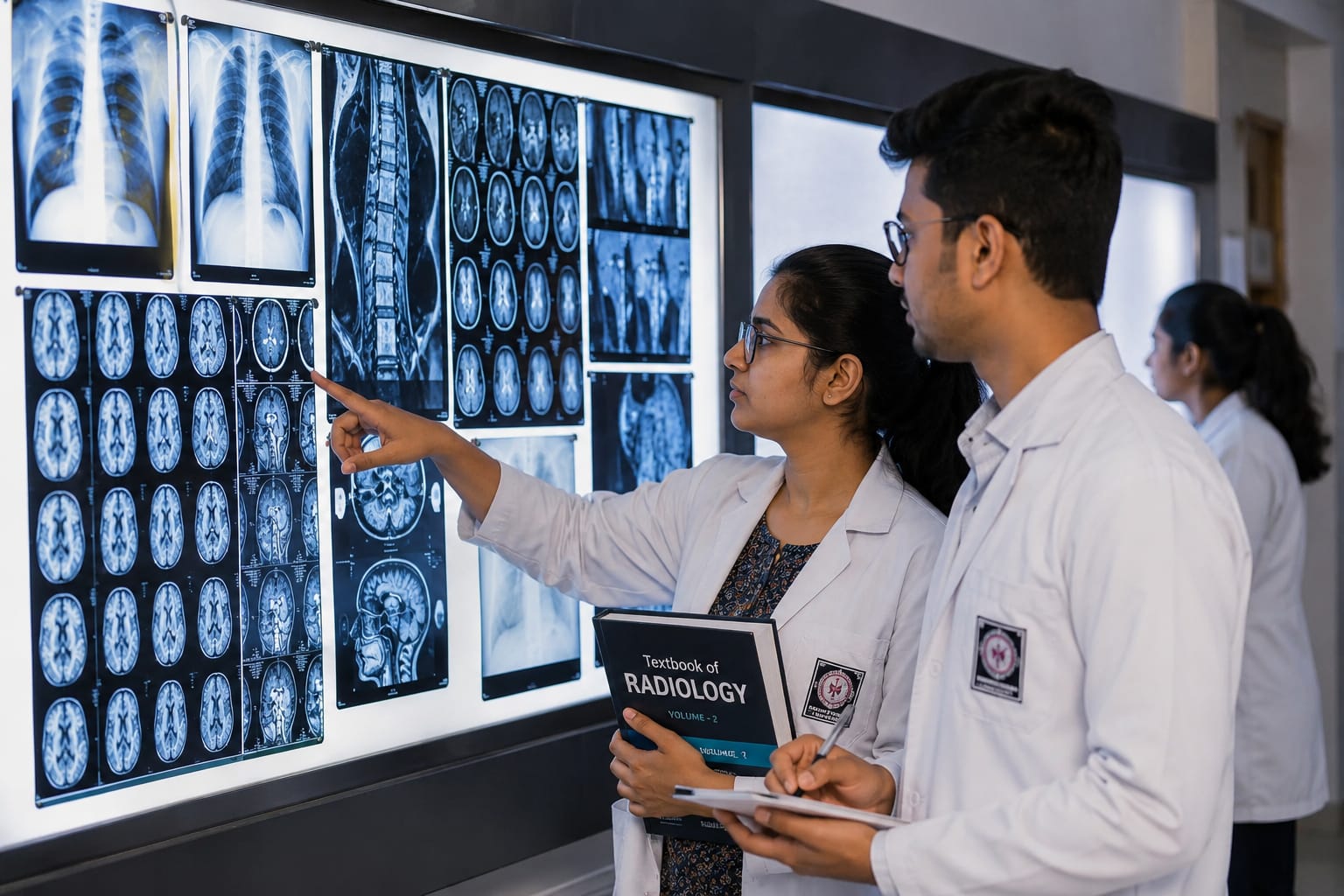 | Best DRIT The Diploma in Radiology & Imaging Technology (DRIT) at K P Paramedical Institute is a career-oriented paramedical program designed to prepare... View product → |
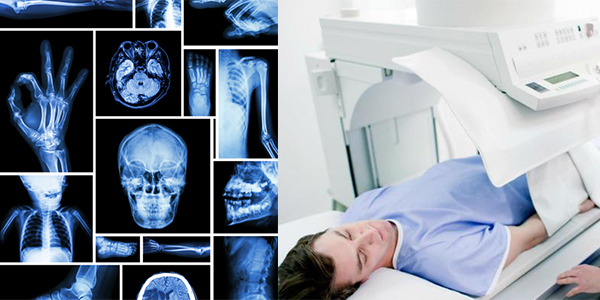 | Best X-RAY The X-Ray Technician Course at K P Paramedical Institute is a career-oriented paramedical program designed to prepare students for careers in... View product → |
Choose the shortest route that does not close your next step
Choose the certificate if you need a narrow, entry-level role quickly and do not need immediate access to CT, MRI or further study. Choose a diploma when you want broader imaging technician training without committing to a degree.
Choose a degree-level pathway when higher-level roles, wider clinical preparation or postgraduate study form part of your plan.
| Option | What it usually offers | Choose it when |
|---|---|---|
| Short X-ray certificate | Projection radiography, patient positioning and basic image handling; clinical exposure depends on the provider | You want a focused start and have confirmed progression options |
| DRIT-style diploma | More anatomy, radiation physics, radiographic positioning, patient care and supervised practice; CT or MRI coverage must be verified | You want broader entry-level opportunities within a shorter route |
| Degree-level programme | Deeper academic study, wider clinical rotations, image evaluation and stronger preparation for advanced roles or further study | You can invest more time and want to keep more options open |
A certificate becomes a poor shortcut if employers or the next programme require a diploma or degree. Before enrolling, ask the awarding body in writing whether the qualification permits lateral entry, credit transfer or eligibility for a higher course.
For drit versus other imaging courses in baramati, compare the route’s next step, not just its start date:
- Confirm the exact title, awarding body and eligibility for the next qualification.
- Ask how many documented clinical cases, logbook sign-offs and supervised rotations are included.
- Check whether portable X-ray, digital radiography, CT, MRI, fluoroscopy and contrast procedures are taught or excluded.
If the answer is unclear, the shorter route may save time now but close doors later.
Frequently asked questions
Why is the awarding body important when comparing DRIT courses?
DRIT is not a universally standardised Indian title. Verify the awarding body, qualification level, duration, syllabus and clinical exposure for each course.
What should you compare between imaging courses in Baramati?
Compare modality coverage and the work each course prepares you to perform, including X-ray, CT, MRI, ultrasound and patient-support tasks.
How can you test the practical training and safety controls?
Ask where clinical placement occurs, how many supervised practical hours are included, and whether training covers radiation protection, positioning, consent and equipment safety.
What should you verify before paying for a radio imaging technology course?
Check eligibility, duration, assessment method, certificate issuer, recognition, clinical placement terms and progression options in writing.