
Admission depends on the qualification being offered, not only on the words “dialysis technician” in a brochure. Before you pay a fee, you need to verify eligibility, awarding authority, clinical training, assessment, total cost and the duties the qualification prepares you to perform.
Key takeaways
- Confirm eligibility for your chosen certificate, diploma or undergraduate route.
- Request the syllabus, clinical rotation schedule and supervisor details in writing.
- Verify whether the course awards a certificate, diploma or recognised degree.
- Check training on infection control, patient safety and technician scope of practice.
Check eligibility before you apply
Your eligibility for dialysis technician admission depends first on the route you choose: certificate, diploma or undergraduate programme.
| Route | Common entry point | What controls eligibility |
|---|---|---|
| Certificate | Class 10 pass | The provider’s stated subjects, marks and age rule |
| Diploma | Class 12 Science, commonly Physics, Chemistry and Biology | The prospectus and awarding authority’s rules |
| Undergraduate programme | Class 12 or an equivalent qualification | The university’s admission and subject requirements |
For a dialysis technology diploma in Baramati, the usual subjects are Physics, Chemistry and Biology, or a specified related science combination. Mathematics is not automatically required. Treat it as compulsory only when the prospectus names Mathematics.
Vocational healthcare qualifications and equivalent examinations count only when the written eligibility rules list them. A non-science background does not qualify by assumption; accept it only if the institution explicitly permits it.
Before submitting documents or paying a fee, ask the admissions office to confirm these points in writing:
- Minimum overall marks and any subject-wise minimum
- Required subjects and accepted science combinations
- Minimum or maximum age
- Gap-year policy
- Accepted equivalent examinations and vocational qualifications
An advertisement may say “eligible candidates welcome,” but it cannot replace the prospectus. Keep the written reply or eligibility page with your application.
Follow the Baramati admission process step by step
1. Obtain the prospectus for the dialysis technician course in Baramati. Confirm the exact deadline, total fee, instalment or fee-payment schedule, examination charges and late-admission rule before collecting documents.
2. Complete the application form exactly as your certificates show. Submit Class 10 and Class 12 marksheets, or accepted equivalent certificates, with a school-leaving or transfer certificate when requested.
3. Add Aadhaar or another accepted identity document, recent passport photographs, and caste or income certificates if you seek a reserved seat or concession. Submit a medical-fitness declaration when clinical attendance requires it.
4. Attend counselling, an interview or document verification if the institute schedules one. Ask how limited seats are allocated: merit, qualifying marks, interview performance, first-come submission or another written method.
5. Pay only through the stated channel and obtain a seat-confirmation receipt. Keep copies of the application, payment proof and submitted documents. Read the refund policy before paying, including deductions after withdrawal and the deadline for requesting a refund.
Ask the admissions office:
- What attendance percentage is required for classes and clinical placement?
- Are vaccination records, hepatitis B vaccination or medical screening required?
- Is the uniform included, and what does it cost?
- Does the fee include student insurance?
- Is there a separate clinical-placement charge?
Identify what qualification you will actually receive
“Diploma” in a course title does not prove recognition by a university, state technical board, skill-qualification framework or healthcare regulator. Before paying, record these details from the prospectus or written admission letter:
- Exact course name, duration and academic level
- Examination authority and certificate issuer
- Affiliation number and approval or affiliation period
Ask the dialysis training institute in baramati whether hospitals you may target accept that named qualification. Check whether the final certificate records clinical hours, examination results and the issuing authority’s contact details.
| Option | What it means | When it fits |
|---|---|---|
| Short certificate | Introductory training with limited academic and clinical scope | An existing hospital worker seeking basic dialysis exposure |
| Dialysis technology diploma | Longer, structured theory, practical training and defined assessment | A candidate seeking technician-level preparation; confirm recognition |
| Medical laboratory technology | Specimen collection, testing and result reporting | A laboratory career, not dialysis work |
| Radiology | Imaging equipment, radiation safety and image acquisition | A diagnostic-imaging career |
For a dialysis technology diploma in baramati, compare the advertised award with the actual examination and issuing bodies. A low-fee certificate is not automatically equivalent to a recognised diploma or undergraduate qualification.
Demand a syllabus and supervised clinical plan
A credible dialysis technician course in Baramati must provide a written syllabus and supervised patient exposure, not just a demonstration on a training machine.
1. Request coverage of renal anatomy and physiology, chronic kidney disease, haemodialysis principles, peritoneal dialysis, vascular-access precautions, dialyser and bloodline selection, setup and priming, anticoagulation, alarm response, documentation, infection control, emergency escalation and biomedical-waste handling.
2. Confirm that the syllabus explains the dialysis water-treatment chain: pretreatment, softening or deionisation where used, reverse osmosis, storage and distribution. It must also cover routine water testing, disinfection and the records used to prove each step was completed.
3. Ask the dialysis training institute in Baramati for a weekly timetable separating classroom, laboratory and clinical hours. “Six months” or “one year” means little if the timetable hides the actual supervised practice.
4. Obtain the clinical facility’s name and type, placement duration, number of dialysis stations, supervisor’s qualification, shift exposure and machine models. Ask how many students share each machine and whether every session, skill and attendance entry receives a signed logbook record.
5. Treat supervised patient exposure as the dividing line between genuine clinical preparation and equipment familiarisation. A useful dialysis technician course in Baramati should let you practise patient identification, observations, infection-control procedures, alarm response and escalation under authorised clinical supervision—not merely watch a classroom setup.
Understand the technician’s role and safety limits
Information on dialysis for technician course admission in Baramati should show how students work under authorised clinical direction, not independently.
1. Verify the patient’s identity against the treatment order. Inspect the dialysis machine, dialyser, bloodlines, alarms and consumables before preparing and priming the extracorporeal circuit.
2. Record pre-dialysis weight, blood pressure, pulse, temperature and vascular-access observations. Confirm bloodline connections carefully; a cross-connection can expose one patient’s blood to another.
3. Monitor the treatment, document settings, observations and events, and report changes promptly. Escalate hypotension, chest pain, bleeding, fever, suspected haemolysis, access problems, air alarms and machine faults to the nurse or nephrologist.
4. Use hand hygiene and appropriate personal protective equipment. Apply the same standard precautions to patients with hepatitis B, hepatitis C or HIV, without discriminatory treatment; follow local isolation procedures when directed. Manage a blood spill with restricted access, PPE, approved disinfectant and sharps disposal.
5. Record post-dialysis weight and vital signs. Disinfect the machine and treatment area between patients, then discard sharps and contaminated waste in labelled containers.
Technicians do not diagnose kidney disease, prescribe dialysis settings or independently change medication doses. A credible course teaches these limits through supervised clinical practice.
Use a written checklist before choosing a provider
Before paying, ask a dialysis training institute in Baramati for a written offer covering every cost and outcome. At K. P. Paramedical Institute, request the current prospectus and confirm the exact dialysis programme, award type, examination authority, clinical partner and supervised-hours requirement.
| Item | Verify in writing | Do not proceed until |
|---|---|---|
| Costs | Total fee; examination and repeat-examination charges; uniform; study material; vaccination or medical screening; insurance; placement charges | Every included and extra charge is listed |
| Training | Attendance requirement; clinical-hours minimum; assessment method; deadline | The timetable and assessment are specific |
| Recognition | Issuing body; facility address; supervisor details; permitted job role after completion | Claims are verified on the awarding body’s official website or office |
| Protection | Refund policy and signed placement or recognition promises | Verbal assurances are documented |
A low-fee short course is not automatically equivalent to a full diploma. Compare documented competencies and patient-facing clinical experience, not course labels alone, before choosing a dialysis technician course in Baramati.
Related product
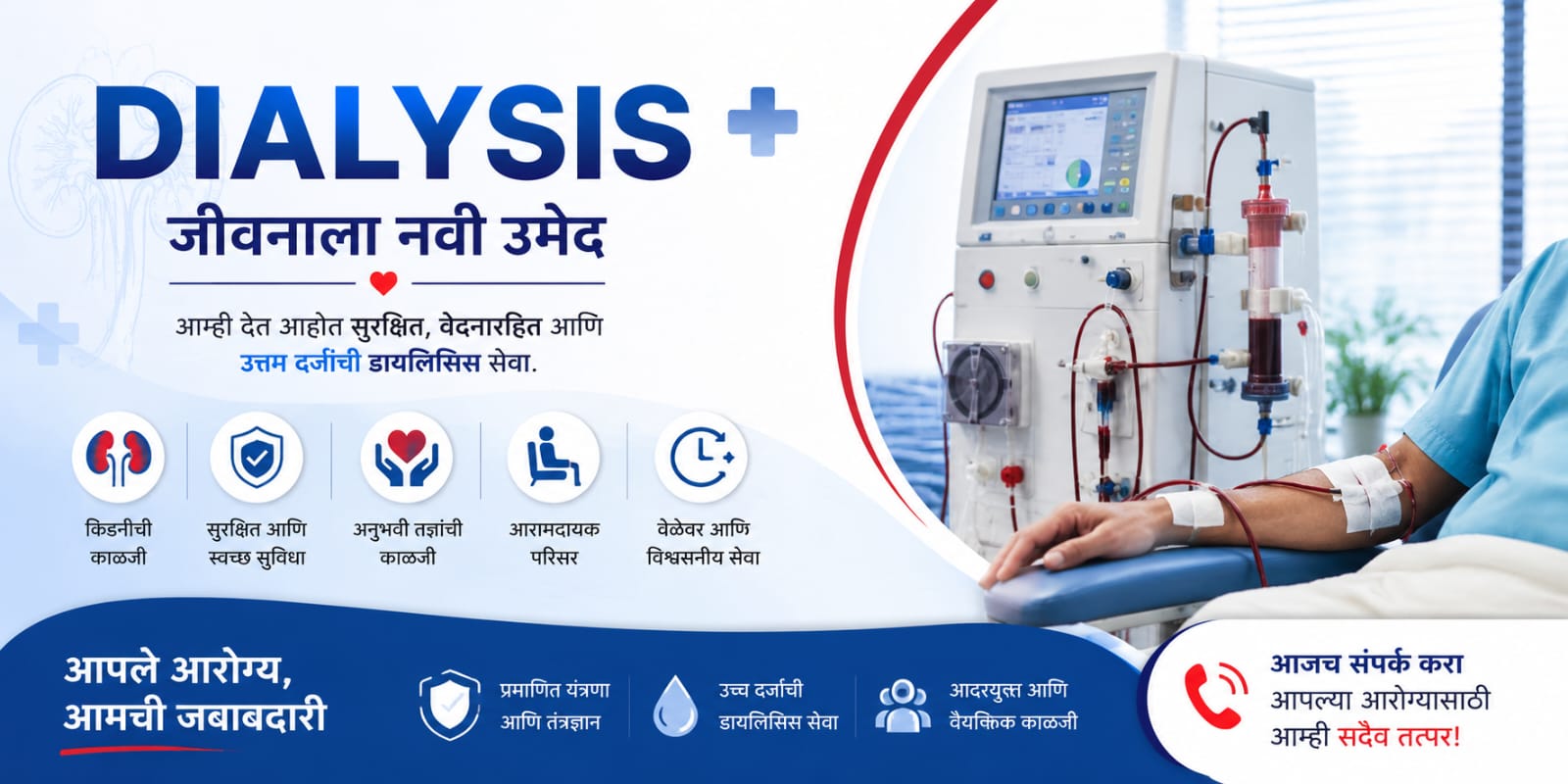 | Best Dialysis The Dialysis Technician Course at K P Paramedical Institute is a career-oriented paramedical program designed to train students in the operation and... View product → |
Frequently asked questions
What should I check before applying for dialysis technician admission?
Confirm that you meet the stated education requirements for the certificate, diploma or undergraduate route, then ask for the application form, document list and selection steps.
How do I compare a dialysis technician course in Baramati?
Compare the qualification awarded, syllabus, practical hours, supervised clinical placements, assessment method and written fee or refund terms.
What should a dialysis technology diploma in Baramati include?
Ask for named modules covering dialysis equipment, water treatment, infection control, patient monitoring, emergency procedures and supervised clinical practice.
What are a dialysis technician’s safety limits?
Technicians prepare and monitor equipment, follow infection-control procedures and report changes, but they work under clinical supervision and do not independently diagnose or prescribe treatment.