An OT technician works through a surgical case from theatre preparation to instrument decontamination, while coordinating equipment, sterile supplies, counts and documentation under clinical supervision. By the end, you will know which skills, hospital exposure, eligibility checks and course documents to examine before choosing training in Baramati.
Key takeaways
- OT technicians prepare rooms, instruments and patients’ support areas under surgical-team supervision.
- Practical training covers instrument handling, theatre equipment, surgical assistance and operating-room preparation.
- Check sterilisation teaching for autoclaves, packaging, tracking records and infection-control procedures.
- Compare eligibility, clinical postings, assessment methods and approval details before applying.
What does an OT technician do before, during and after surgery?
An OT technician prepares the operating room and supports the surgical team under supervision. The role does not include diagnosing patients, prescribing treatment, administering anaesthesia independently or performing an operation. Duties vary by qualification, employer and state rules.
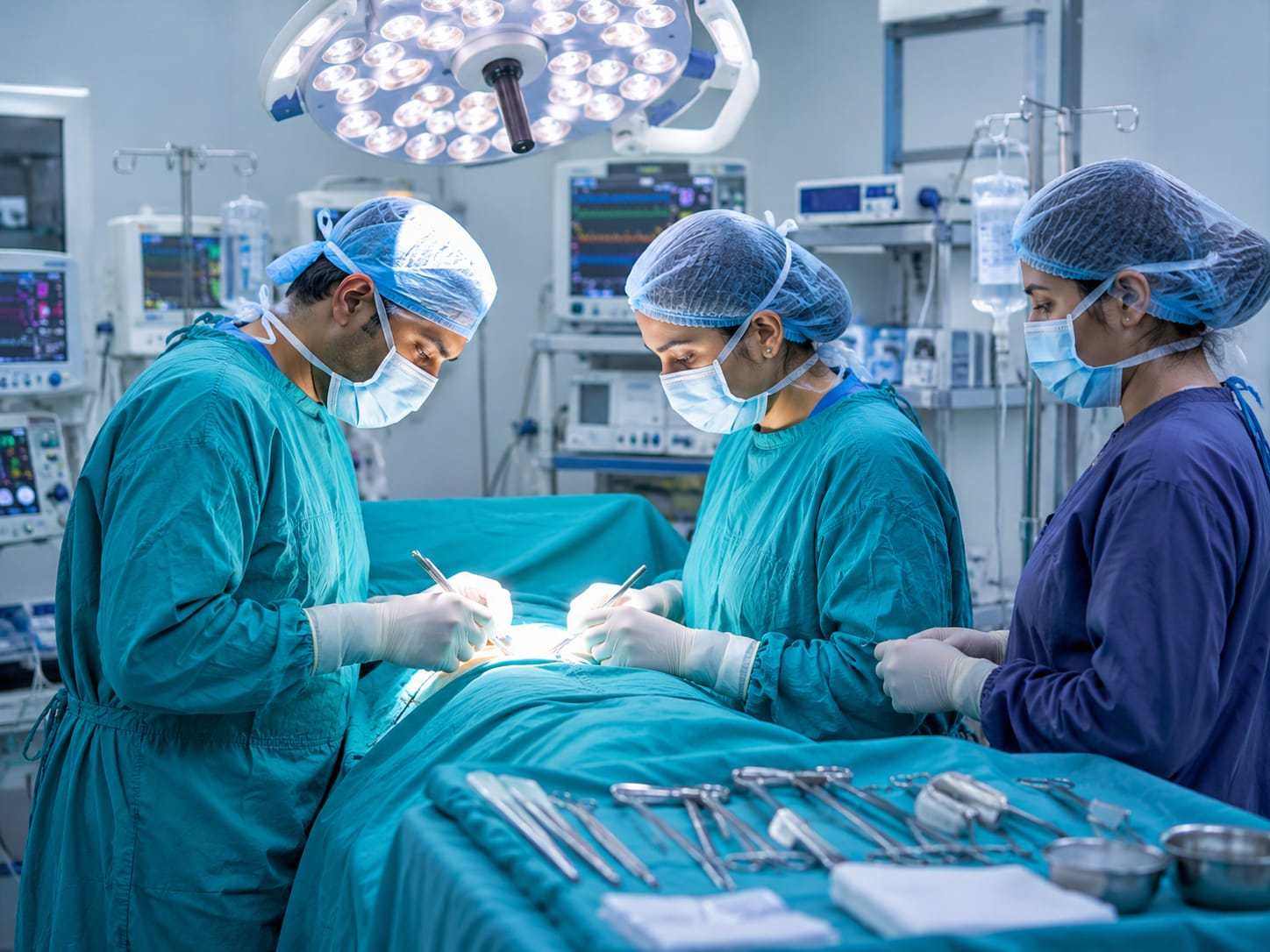
1. Before surgery, check the theatre table, lights, suction, diathermy, oxygen connections and emergency equipment. Arrange sterile instrument sets, gowns, gloves, drapes, sutures and positioning aids. Confirm pack indicators, implant details and expiry dates, then help prepare the patient and documentation.
2. During surgery, protect the sterile field, pass or receive instruments as directed, manage suction and equipment, and support sponge, instrument and needle counts. Help verify specimen labels and readiness for the WHO Surgical Safety Checklist pauses: before anaesthesia, before incision and before the patient leaves the room.
3. After surgery, secure specimens, complete counts and records, assist with patient transfer, and send used instruments and contaminated materials through the correct decontamination route. Clean and reset the theatre for the next case without mixing clean and used supplies.
The roles are different:
| Role | Main responsibility |
|---|---|
| OT technician | Theatre preparation, equipment, sterile supplies, counts and turnover |
| Scrub nurse | Sterile-field management and instrument assistance |
| Circulating nurse | Non-sterile coordination, records, supplies and patient-safety checks |
| Surgical assistant | Hands-on assistance requested by the surgeon |
| Surgeon | Diagnosis, operation and surgical decisions |
| Anaesthesia professional | Anaesthesia, airway, monitoring and recovery decisions |
For the search phrase ot technician course in baramati details, compare programmes by supervised clinical exposure, not syllabus claims alone.
Which practical skills and equipment are taught in the OT?
Students practise the hands-on routines that keep surgery safe, organised and ready for the next case. An operation theatre technician course in Baramati should include repeated supervised practice, not only demonstrations in a classroom.
- Perform a surgical hand scrub, dry without contamination, and complete gowning and closed or open gloving.
- Set up and protect the sterile field, recognise a breach, and replace contaminated items promptly.
- Identify general and orthopaedic instruments, pass them safely, and return used instruments for decontamination.
- Count sponges, gauze, needles and instruments with the circulating nurse before incision, during closure and before the patient leaves.
- Position patients with pressure-point protection, safety straps and correct access for surgery, then assist with transfer to recovery.
- Label specimens at the theatre table, match the container with the request form, and send it through the approved route.
- Clear waste, linen and used equipment, disinfect surfaces, replenish supplies and prepare the room for turnover.
Equipment checks are taught alongside these procedures:
| Equipment | Student checks | What a failed check can cause |
|---|---|---|
| Operating table | Movement, brakes, attachments and padding | Falls, pressure injury or poor surgical access |
| Surgical lights | Focus, intensity and sterile handles | Shadows or contamination during surgery |
| Suction unit | Tubing, canister, seal and vacuum | Blood or secretions obscuring the field |
| Electrosurgical unit | Leads, foot pedal, settings and return electrode | Burns or ineffective cutting |
| Anaesthesia machine and monitor | Connections, oxygen supply, alarms and readings | Delayed response to a patient emergency |
Students also learn to support the team’s safety pauses by confirming equipment, implants, specimens and counts rather than making clinical decisions independently.
How are sterilisation and infection-control procedures taught?
Students learn that cleaning removes visible soil and organic material, disinfection destroys many disease-causing organisms on surfaces, and sterilisation destroys all microorganisms, including spores. Cleaning must come first; dried blood left on an instrument can prevent effective disinfection or sterilisation.
| Cleaning | Removes soil and organic matter | Before disinfection or sterilisation |
|---|---|---|
| Disinfection | Reduces microorganisms on equipment or surfaces | For items that do not enter sterile tissue |
| Sterilisation | Eliminates all microorganisms, including spores | For instruments entering sterile tissue or the bloodstream |
An operation theatre technology course teaches students to load an autoclave correctly, choose the validated steam cycle for the instrument set and packaging, and check temperature, pressure and exposure time on the printout or display.
They place chemical indicators inside packs and review the colour change after processing; a failed indicator means the pack is not released. Biological monitoring and routine steriliser records are also explained.
Students inspect sterile packs for a broken seal, moisture, torn wrapping, missing label, unreadable sterilisation date and exceeded expiry or event-related storage limit. They practise segregation at the point of disposal:
- Yellow: anatomical waste and soiled dressings
- Red: contaminated recyclable plastic
- White translucent: needles, blades and other sharps
- Blue: contaminated glassware and metallic implants
Sharps are never recapped by hand; students discard them immediately into a puncture-proof container and report needlestick injuries for prompt assessment. They also rehearse hand hygiene, sterile gowning, and stopping work when a glove, gown, instrument or sterile field touches a non-sterile surface.
What subjects, clinical postings and assessments make up the course?
The syllabus combines classroom science with supervised theatre work. Anatomy and physiology explain body systems; microbiology covers pathogens and infection prevention; pharmacology basics introduce common medicines, fluids and drug safety; and medical terminology teaches the language used in patient records and surgical communication.
A typical sequence moves from demonstrations to simulation and then hospital shifts:
- Learn anaesthesia assistance, surgical procedures, patient positioning, instrument and equipment identification, emergency response and patient safety.
- Practise airway-support preparation, monitoring equipment checks, sterile setup, specimen handling and post-operative transfer in demonstrations or a simulation lab.
- Attend hospital postings covering elective and emergency cases. Ask whether shifts include general and orthopaedic surgery, anaesthesia rooms, sterile supply areas and theatre turnover, rather than observation alone.
- Record each procedure in a logbook, including the case type, your task, supervisor’s signature and competency outcome.
- Complete supervised cases before independent assessment. A classroom session cannot prove that you can maintain a sterile workflow during a real operation.
Assessments can include written tests, oral questioning, instrument-identification stations, skill demonstrations, logbook reviews and observed clinical performance. Emergency drills may test response to bleeding, airway problems or cardiac arrest.
Before joining OT technician training in Baramati, ask for the guaranteed clinical-hour total in writing. Confirm where those hours occur, how many cases students perform under supervision, who signs the logs and what happens if hospital access is interrupted. The award title and clinical exposure must match your intended role.
How should you check eligibility and compare OT courses in Baramati?
For OT technician admission in Baramati, identify the exact award before comparing classrooms or advertised duration. An operation theatre technology course may lead to a certificate, diploma or B.Sc.; these awards differ in eligibility, clinical hours, examination authority and recognition.
| Award | Entry level to verify | Main comparison |
|---|---|---|
| Certificate | SSC or another stated vocational requirement | Shorter training; check the certificate issuer and clinical hours |
| Diploma | HSC Science, minimum marks and age rules in the prospectus | Check the board or awarding body and hospital placement |
| B.Sc. | HSC Science subjects, minimum marks and university conditions | Check university affiliation, examination rules and degree status |
Use this admission checklist before paying:
- Read the current prospectus for minimum marks, age limit, medical fitness or vaccination documents, entrance-test syllabus, interview rule and domicile condition.
- Prepare the requested SSC or HSC marksheet, leaving certificate, Aadhaar card, photographs, caste or income certificate and medical certificate; submit only documents the institute names.
- Demand the affiliation or approval letter for the specific course, not a general institute registration.
- Confirm who conducts examinations and issues the final certificate, diploma or degree.
- Inspect the clinical-training agreement or hospital list. Ask for supervised hours, elective and emergency exposure, and access to instruments and anaesthesia equipment.
- Get the latest fee schedule, instalments, examination charges, hostel costs and written refund policy.
K. P. Paramedical Institute should be asked for these course-specific documents so you can compare its OT programme with other Baramati providers on evidence, not promises.
Related product
 | Best OT Technician The Operation Theatre (OT) Technician Course at K P Paramedical Institute is a career-focused paramedical program designed to train students in the... View product → |
Frequently asked questions
What does an OT technician do before, during and after surgery?
Before surgery, the technician prepares the operating room, checks instruments and supports sterile setup. During surgery, the technician passes instruments and assists the surgical team under supervision. After surgery, the technician helps with instrument counts, waste segregation, cleaning and room turnover.
Which practical skills and equipment are taught in an OT technician course?
Training can include operating-room preparation, instrument identification, sterile gowning and gloving, surgical counts, patient positioning support and handling theatre equipment. Ask each institute for its practical-lab and equipment list.
How are sterilisation and infection-control procedures taught?
Students learn cleaning, decontamination, packing, labelling, sterilisation, storage and documentation. Ask whether training includes autoclave operation, sterilisation indicators, instrument tracking, personal protective equipment and biomedical-waste segregation.
What subjects, clinical postings and assessments make up the course?
Course components can include anatomy, physiology, microbiology, pathology, pharmacology basics, surgical procedures, anaesthesia support and infection control. Compare classroom teaching, supervised hospital postings, practical examinations, written tests and logbook requirements.
How should you compare OT technician courses in Baramati?
Check the entry qualification, course duration, awarding body, written fee schedule, hospital posting arrangements, practical hours, assessment format and certificate details. Confirm admission requirements directly with the institute before paying fees.