The value of OT technician training in Pune depends less on receiving a certificate and more on gaining supervised theatre experience, a qualification employers accept and skills that lead to realistic entry-level work. By comparing the job’s daily demands, course quality, total cost and local hiring requirements, you can decide whether the investment fits your career plan.
Key takeaways
- Expect supervised theatre work, not independent diagnosis, surgery or anaesthesia management.
- Compare OT, surgical technologist and anaesthesia technician duties before choosing a course.
- Check practical training, hospital exposure, assessment and placement claims before paying fees.
- Choose training that prepares you for sterile technique, instruments, documentation and emergency teamwork.
What Does an OT Technician Actually Do During a Surgical Case?
An OT technician keeps the operating theatre ready and safe; the technician does not diagnose, prescribe, operate or independently manage anaesthesia. An OT technician career in Pune therefore depends on reliable teamwork, supervised technical skill and willingness to work rostered mornings, nights, weekends and emergency call.
During a surgical case, the work follows three stages:
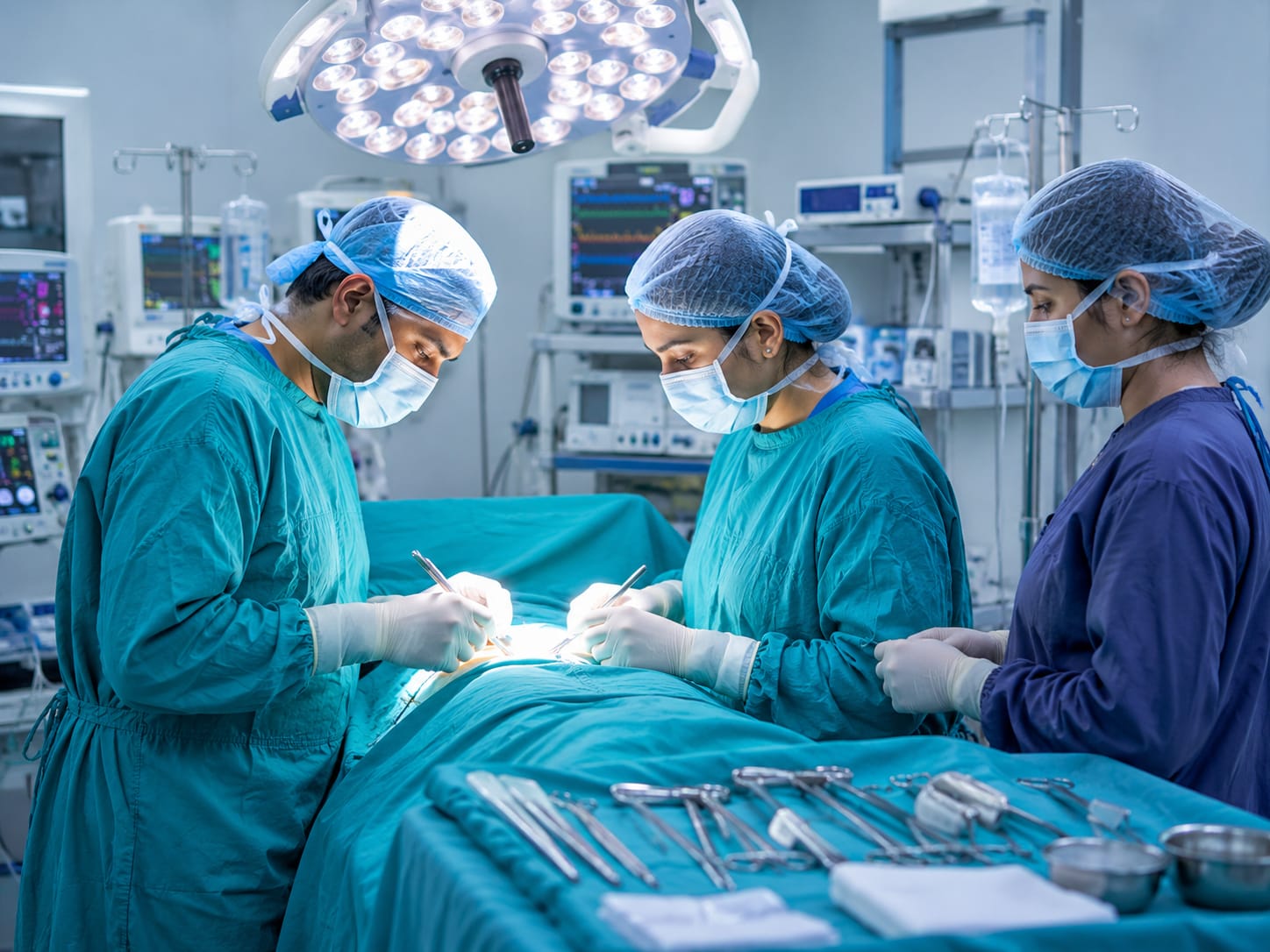
- Before anaesthesia: Check the operating table, lights, suction, cautery unit, oxygen connections, instruments, sterile packs and protective equipment. Help transfer and position the patient, then support the team during the WHO Surgical Safety Checklist pause.
- Before skin incision: Arrange instruments and supplies, maintain the sterile field, assist the scrub team under supervision, confirm counts with the scrub and circulating nurses, and label or send specimens according to hospital procedure.
- Before the patient leaves: Repeat instrument, needle and swab counts, help transfer the patient, record used supplies and specimens, remove waste into the correct biomedical-waste containers, and prepare the room for the next case.
The role ends at defined clinical boundaries:
| Role | Primary responsibility |
|---|---|
| Surgeon | Performs the operation and makes surgical decisions |
| Anaesthetist | Manages anaesthesia, airway, pain and vital functions |
| Registered nurse | Provides nursing assessment, care and medication management |
| Scrub nurse | Controls the sterile field and passes instruments |
| Circulating nurse | Coordinates non-sterile activities, records and counts |
| Hospital attendant | Handles transport, basic support and environmental tasks |
During recovery, the technician assists with transfer and theatre turnover; the anaesthetist and registered nurse assess and monitor the patient.
Which Practical Skills Make OT Technician Training Valuable?
Operation theatre course benefits come from supervised repetition of safety-critical routines, not from memorising instrument names. You should practise each task in a functioning theatre, including emergency-theatre preparation and the three WHO Surgical Safety Checklist pauses: before anaesthesia, before skin incision and before the patient leaves the operating room.
| Skill area | What practical training covers | Why it matters |
|---|---|---|
| Sterile technique | Surgical hand scrub, gowning and gloving, aseptic technique and sterile-field maintenance | Prevents contamination during patient preparation and surgery |
| Instruments and sterilisation | Instrument identification, decontamination, cleaning, packaging, sterilisation indicators, traceability, sterilisation workflow and autoclave use | A failed packaging or sterilisation step can expose the next patient to infection |
| Equipment and disposal | Suction setup, electrosurgical-unit safety, sharps handling and biomedical-waste segregation | Reduces airway, burn, needlestick and disposal errors |
| Case control | Specimen handling, instrument, swab and needle counts, and documentation | Protects specimens and helps detect retained items or missing records |
Ask the institute for documented clinical postings, approximate procedures observed or assisted, and evidence that trainees perform aseptic transfers, surgical counts and sterilisation tasks under supervision. Training should also include PPE, incident reporting, manual handling and equipment troubleshooting because the job involves prolonged standing, blood, disinfectants, sharps and heavy equipment.
These practical skills travel better between general, orthopaedic, obstetric, trauma and emergency theatres than theory alone.
How Do OT Technician, Surgical Technologist and Anaesthesia Technician Roles Differ?
In Pune, these titles overlap, but the daily work and hiring eligibility do not. The job advertisement matters more than the title: one hospital may call the same theatre-support post an OT technician, while another uses surgical technologist.
| Role | Main responsibility | Common boundary |
|---|---|---|
| OT technician | Prepares the theatre, instruments, equipment, counts and records | Does not diagnose, prescribe anaesthesia or perform surgery |
| Surgical technologist | Maintains the sterile field, passes instruments and supports the surgical team | Often a more formal title for scrub-focused work |
| OT assistant | Transfers patients, fetches supplies, cleans and resets the room | Usually has less instrument and sterile-field responsibility |
| Anaesthesia technician | Prepares the anaesthesia workstation, circuits, airway equipment and emergency supplies | Works under the anaesthetist, not as an independent anaesthesia provider |
| Course route | Entry and practical training | Assessment, recognition and vacancies |
|---|---|---|
| Certificate | Often flexible entry; hours vary widely | Private assessment may limit acceptance for government or large-hospital posts |
| Vocational qualification | Eligibility and practical hours depend on the awarding body | Check the named examination authority and level |
| Diploma | Commonly requires secondary or higher-secondary eligibility; clinical hours should be written into the syllabus | A recognised diploma can satisfy recruitment rules that reject short certificates |
| Degree | Usually requires higher-secondary science subjects and longer clinical training | A bachelor’s degree can meet posts specifying graduate-level OT technology |
OT technician course value depends on supervised hospital hours, the awarding body and the qualification named in current recruitment notifications. Verify all three before paying; “government approved” alone proves nothing.
When Does OT Technician Training Pay Off in Pune?
A course pays off when its total cost is matched by real theatre access and a credible route into entry-level work. Searches such as “is ot technician training worth it in pune” are only useful after you calculate the full bill and the months of earnings you will give up while studying.
Ask the institute to itemise:
- Tuition and examination fees
- Uniforms, shoes and required instruments
- Immunisations, medical checks and background checks
- Daily travel, clinical-placement charges and hostel fees
- Study time and income lost during attendance or internship
Do not treat a placement percentage as proof. Ask for the graduating batch size, number placed, job titles, employers, starting-pay range and date of measurement. A low-fee course with observation-only access can have less value than a longer course with supervised hospital practice.
Your clinical posting should expose you to:
- General surgery
- Orthopaedics
- Obstetrics
- Trauma and emergency theatres
An OT technician career in Pune includes rostered early starts, evenings, nights, weekends and emergency call. Ask whether postings include night duty, emergency cases and transport arrangements. The work also means prolonged standing, moving equipment or patients, repeated hand hygiene and exposure to sharps, blood, disinfectants and radiation-controlled areas.
Training in manual handling, PPE and incident reporting matters.
The investment becomes stronger when you leave with portable skills in sterile processing, instrumentation, documentation, equipment troubleshooting and emergency communication. Those skills can support later movement into central sterile services, endoscopy or specialist theatres, while supervisory roles may require further experience or study.
How Can You Check an OT Training Institute Before Paying?
A low fee does not prove good OT technician course value. Before paying an ot training institute in pune, ask for documents and verify them during a site visit.
1. Request the written curriculum. It should state course duration, classroom and clinical-posting hours, supervised procedures, sterilisation, surgical counts, specimen handling, emergency-theatre preparation and the three WHO Surgical Safety Checklist pauses.
2. Ask for the hospital tie-up in writing, including the named internship site, posting dates, supervisor’s designation and the number of students per batch. Visit that hospital and ask whether students handle instruments under supervision or only observe. Confirm how an ended tie-up is replaced.
3. Check faculty names, qualifications and current theatre experience. Inspect functioning instrument sets, autoclaves, suction equipment, electrosurgical units and personal protective equipment. Ask for attendance thresholds, absence make-up rules, assessment method and the approximate procedures each student observes or assists.
4. Verify the awarding body, affiliation, qualification level, examination authority and certificate recognition with two target hospitals in Pune. A certificate, vocational qualification, diploma and degree are not interchangeable.
5. Demand anonymised placement records showing employer, job title and joining date, not only hospital logos. Get the complete fee schedule, examination charges, uniform costs, instalment dates, cancellation deadline and refund amount in writing.
You can apply the same test to K. P. Paramedical Institute: compare its written answers and verifiable records with competing institutes rather than treating course claims as proof.
Related product
 | Best OT Technician The Operation Theatre (OT) Technician Course at K P Paramedical Institute is a career-focused paramedical program designed to train students in the... View product → |
Frequently asked questions
Is OT technician training worth it for a healthcare career in Pune?
It can be worthwhile if you want supervised operating-theatre work and accept rostered shifts, emergency call and close teamwork. Compare the course’s practical training and hospital exposure with your career goals before enrolling.
What does an OT technician do during a surgical case?
An OT technician prepares the theatre, instruments, sterile supplies and equipment; supports the surgical team during the case; maintains counts and documentation; and helps reset the room afterward. The role does not include diagnosing, prescribing, operating or independently managing anaesthesia.
How do OT technician, surgical technologist and anaesthesia technician roles differ?
OT technician duties cover operating-theatre preparation, sterile support, equipment and case coordination. Surgical technologists focus more narrowly on sterile instrumentation and the operative field, while anaesthesia technicians prepare anaesthesia equipment and support the anaesthesia team under supervision. Titles and duties vary by employer, so read the job description.
How can I check an OT training institute in Pune before paying?
Ask to inspect the syllabus, skills lab, equipment list, clinical placement details, attendance and assessment rules, certificate issuer, total fees and refund terms. Request written evidence for hospital tie-ups and placement claims, and confirm how much supervised theatre practice students receive.